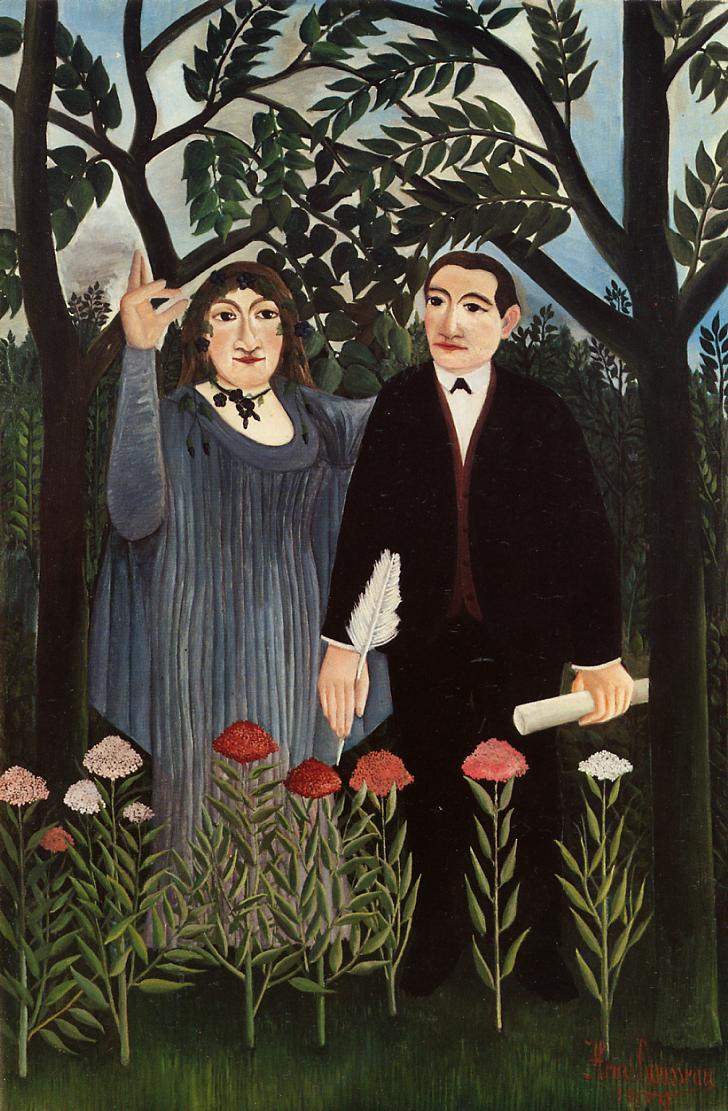
Lorelei viewed by Apollinaire, and by Kölsch

In 1902 Guillaume Apollinaire took the legend of Lorelei from the point where Heinrich Heine had left it, and went further, mixing a bit of emotional detachment in the way of telling the story, adding a bishop sensible to female beauty, making from Lorelei a woman painfully longing for a past lover, to the point of suicide, and eventually reversing the perspective. The result was La Loreley:
À Bacharach il y avait une sorcière blonde
Qui laissait mourir d’amour tous les hommes à la ronde
Devant son tribunal l’évêque la fit citer
D’avance il l’absolvit à cause de sa beauté
Ô belle Loreley aux yeux pleins de pierreries
De quel magicien tiens-tu ta sorcelerie
Je suis lasse de vivre et mes yeux sont maudits
Ceux qui m’ont regardée évêque en ont péri
Mes yeux ce sont des flammes et non des pierreries
Jetez jetez aux flammes cette sorcellerie
Je flambe dans ces flammes ô belle Loreley
Qu’un autre te condamne tu m’as ensorcelé
Evêque vous riez Priez plutôt pour moi la Vierge
Faites-moi donc mourir et que Dieu vous protège
Mon amant est parti pour un pays lointain
Faites-moi donc mourir puisque je n’aime rien
Mon coeur me fait si mal il faut bien que je meure
Si je me regardais il faudrait que j’en meure
Mon coeur me fait si mal depuis qu’il n’est plus là
Mon coeur me fit si mal du jour où il s’en alla
L’évêque fit venir trois chevaliers avec leurs lances
Menez jusqu’au couvent cette femme en démence
Vat-en Lore en folie va Lore aux yeux tremblant
Tu seras une nonne vétue de noir et blanc
Puis ils s’en allèrent sur la route tous les quatre
la Loreley les implorait et ses yeux brillaient comme des astres
Chevaliers laissez-moi monter sur ce rocher si haut
Pour voir une fois encore mon beau château
Pour me mirer une fois encore dans le fleuve
Puis j’irai au couvent des vierges et des veuves
Là haut le vent tordait ses cheveux déroulés
Les chevaliers criaient Loreley Loreley
Tout là bas sur le Rhin s’en vient une nacelle
Et mon amant s’y tient il m’a vue il m’appelle
Mon coeur devient si doux c’est mon amant qui vient
Elle se penche alors et tombe dans le Rhin
Pour avoir vu dans l’eau la belle Loreley
Ses yeux couleur du Rhin ses cheveux de soleil
Qui laissait mourir d’amour tous les hommes à la ronde
Devant son tribunal l’évêque la fit citer
D’avance il l’absolvit à cause de sa beauté
Ô belle Loreley aux yeux pleins de pierreries
De quel magicien tiens-tu ta sorcelerie
Je suis lasse de vivre et mes yeux sont maudits
Ceux qui m’ont regardée évêque en ont péri
Mes yeux ce sont des flammes et non des pierreries
Jetez jetez aux flammes cette sorcellerie
Je flambe dans ces flammes ô belle Loreley
Qu’un autre te condamne tu m’as ensorcelé
Evêque vous riez Priez plutôt pour moi la Vierge
Faites-moi donc mourir et que Dieu vous protège
Mon amant est parti pour un pays lointain
Faites-moi donc mourir puisque je n’aime rien
Mon coeur me fait si mal il faut bien que je meure
Si je me regardais il faudrait que j’en meure
Mon coeur me fait si mal depuis qu’il n’est plus là
Mon coeur me fit si mal du jour où il s’en alla
L’évêque fit venir trois chevaliers avec leurs lances
Menez jusqu’au couvent cette femme en démence
Vat-en Lore en folie va Lore aux yeux tremblant
Tu seras une nonne vétue de noir et blanc
Puis ils s’en allèrent sur la route tous les quatre
la Loreley les implorait et ses yeux brillaient comme des astres
Chevaliers laissez-moi monter sur ce rocher si haut
Pour voir une fois encore mon beau château
Pour me mirer une fois encore dans le fleuve
Puis j’irai au couvent des vierges et des veuves
Là haut le vent tordait ses cheveux déroulés
Les chevaliers criaient Loreley Loreley
Tout là bas sur le Rhin s’en vient une nacelle
Et mon amant s’y tient il m’a vue il m’appelle
Mon coeur devient si doux c’est mon amant qui vient
Elle se penche alors et tombe dans le Rhin
Pour avoir vu dans l’eau la belle Loreley
Ses yeux couleur du Rhin ses cheveux de soleil
Apollinaire published the poem in 1904, within his volume Alcools (the cycle Rhénanes). Nowadays, a talented DJ, Kölsch, gave a replica to the French poem in a minimalist gem of electronic music:
The English version of Apollinare's poem is known as The Suicide:
In Bacharach lived a witch with fair hair
who let all the men around die of love.
The bishop summoned her to his court
and acquitted her on account of her beauty.
Oh lovely Loreley, your eyes are made of precious stones,
which magician gave you the power of sorcery?
I am weary of life and my eyes are accursed;
oh bishop, those who have looked at me have perished.
My eyes are not precious stones but flames,
throw this sorcery to the fire.
That fire is consuming me, oh lovely Loreley,
somebody else has to condemn you, for you have enchanted me.
Bishop you laugh. Pray rather to the Virgin for me,
let me die and may God protect you.
My lover has left for a distant land,
let me die for there is nothing I love.
My heart is so heavy that I must necessarily die,
I would die if I would dare look at myself.
My heart is so heavy since he is no longer there,
my heart has been so heavy since the day he left.
The bishop summoned three knights armed with lances:
take this demented woman to the convent.
Go away Lore in madness, away Lore with tremulous eyes,
you shall become a nun dressed in black and white.
So the four left down the road,
the Loreley implored them and her eyes glowed bright like stars.
Knights, please let me climb onto that rock so high
for I may see my beautiful castle one last time.
To see once more my reflection in the river
and then I shall go to the convent of virgins and widows.
Up there, the wind blew her untied hair,
the knights cried: Loreley, Loreley.
Down there, on the Rhine, comes a boat
and, on board, there is my lover, he has seen me and calls.
My heart becomes so tender, it is my lover returning.
She leans over and falls into the Rhine.
To see her in the water, the beautiful Loreley,
her Rhine-coloured eyes, her sun-like hair.
who let all the men around die of love.
The bishop summoned her to his court
and acquitted her on account of her beauty.
Oh lovely Loreley, your eyes are made of precious stones,
which magician gave you the power of sorcery?
I am weary of life and my eyes are accursed;
oh bishop, those who have looked at me have perished.
My eyes are not precious stones but flames,
throw this sorcery to the fire.
That fire is consuming me, oh lovely Loreley,
somebody else has to condemn you, for you have enchanted me.
Bishop you laugh. Pray rather to the Virgin for me,
let me die and may God protect you.
My lover has left for a distant land,
let me die for there is nothing I love.
My heart is so heavy that I must necessarily die,
I would die if I would dare look at myself.
My heart is so heavy since he is no longer there,
my heart has been so heavy since the day he left.
The bishop summoned three knights armed with lances:
take this demented woman to the convent.
Go away Lore in madness, away Lore with tremulous eyes,
you shall become a nun dressed in black and white.
So the four left down the road,
the Loreley implored them and her eyes glowed bright like stars.
Knights, please let me climb onto that rock so high
for I may see my beautiful castle one last time.
To see once more my reflection in the river
and then I shall go to the convent of virgins and widows.
Up there, the wind blew her untied hair,
the knights cried: Loreley, Loreley.
Down there, on the Rhine, comes a boat
and, on board, there is my lover, he has seen me and calls.
My heart becomes so tender, it is my lover returning.
She leans over and falls into the Rhine.
To see her in the water, the beautiful Loreley,
her Rhine-coloured eyes, her sun-like hair.
(Apollinaire)
Labels: Apollinaire, Lorelei
posted by Pierre Radulescu at
3:31 PM
|
0 comments