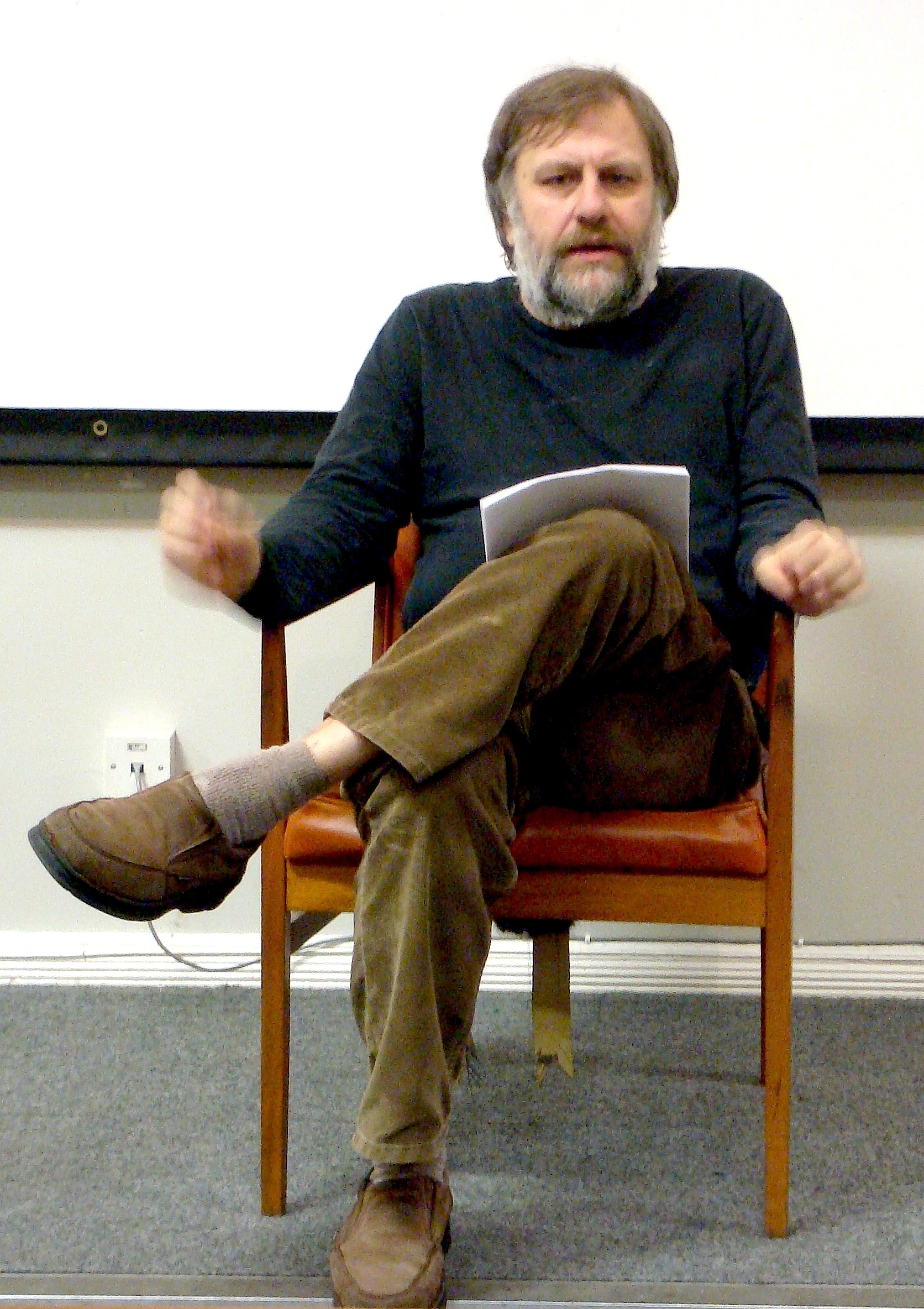
I didn't know anything about
Slavoj Žižek. My son gave me some info. I read a couple of years ago a book about
Post-Marxism (
Rupert Woodfin:
Introducing Marxism). I made then some notes, both in English and Romanian, as I found more convenient. Here they are:
De la respingerea absolutizarii determinismului economic pana la respingerea absolutizarii claselor
Antonio Gramsci -
Hegemonie: controlul ideologiei - transformarea ideologiei in cultura.
1. Agreement from the majority of a society for the
picture of life that is represented by those in power
2. The values, both moral and political, involved in this agreement will be largely those of the rulling class
3. The ideology comes to be seen as evident "commonsense" by the majority of people. It becomes
natural to think like that
4. The consent is arrived at largely peacefully, but physical force can be used to support it against a dissident minority, so long that the majority acquiesce
Scoala de la Frankfurt (
Teoria critica) - rolul
mass-mediei in controlul ideologiei:
1.
Theodor Adorno, filosof, sociolog, muzicolog
2.
Walter Benjamin, eseist, critid literar
3.
Herbert Marcuse, filosof
4.
Max Horkheimer, filosof, sociolog
5.
Jürgen Habermas, filosof, sociolog
Louis Althusser -
Antiumanism: in locul umanismului structuralism, mai bine zis in locul explicatiei bazate pe esenta umana - structuri sociale
El respinge esentialismul marxist. Esentialism = reducerea la un principiu esential. Gagiul respinge esentialismul economic si pe cel uman. In locul esentei umane trebuie sa consideram structuri care isi impun ideologiile (biserica, legi, scoala autonome totusi fata de sistemul capitalist). Deci suntem conditionati nu de natura noastra ci de ideologiile structurilor. Pasul de la raul unic (capitalismul odios cu instrumentele sale) la structuri autonome
Postmodernismul merge mai departe si in loc de ideologii impuse de structuri prin mass-media ne vorbeste de
limbaje -
realitatea o percepem nu prin idei ci prin cuvinte (al caror inteles evolueaza in timp si depinde de interesele de moment ale grupului si nu ale structurii) organizate in discursuri (narari) - nu avem de a face cu ideologii, ci cu discursuri (narari, povestiri) - si nu structuri oarecum fixe (biserica, scoala, etc) ci cu grupuri
Ludwig Wittgenstein, logician: Whereof we cannot speak, thereof we must remain silent
Jacques Lacan, psihanalist: There is no
person at all. Language actually constitutes consciousness.
Jacques Derrida, filosof: The postmodern person is the text and the narratives
Derrida il combate pe
Fukuyama (autorul lui
The End of History and the Last Man) ca si pe
Marx si
Hegel nu exista punct final in istorie pt. ca nu exista istorie ci limbaj si pt. ca antagonismele si conflictele apar mereu
Ernesto Laclau si doamna
Chantal Mouffe
Hegemony and Socialist Strategy: Towards a Radical Democratic Politics
1. Socialism does not work and neither does any other grand narrative. The ideologies associated with them are always false.
2. Classes are degenerating and disappearing and attempts to explain things in terms of them are reductionist and wrong. There are many other significant sources of identity and conflict, such as gender, ethnicity, sexual preference.
3. The state as such is always dangerous and cannot deliver effective social welfare: this can only be done by civil society,
4. Any form of central planning is inefficient and tends to corruption; market is the only mechanism which allows for fair distribution.
5. The old left approach to politics always ends in authoritarian regimes which crush civil society. Politics should exist only at the local level, with local struggles over local issues.
6. Conflicts (antagonisms) are inevitable and some may be resolved, this merely transforms and clears the ground for further, newer antagonisms. An overview of all conflicts and their eventual resolution is impossibls. All we can have are understandings of particular situations at particular moments.
7. This is a good thing, since the resolution of all conflicts would result in a stale, rigid society. An ideal would be a pluralist democracy providing a stable framework for many local conflicts.
8. Revolutions either cannot happen or end badly. The alternative is democratic transition
9. Solidarity can exist within and across a range of different groups, it is a humanitarian gesture. A belief in class solidarity as the only valid form of solidarity is harmful to this process.
10. In an interdependent, globalized world, anti-imperialism has had its day. The world is too complex.
What I would like to add, a small note: it seems to me that the guys outlined the importance of culture: the control over culture is as important as the control over economy. Each one is a forcing drive for the other. As
Gramsci was preoccupied by popular culture (I remember I have read long time ago about his appreciation of detective novels), it was interesting to find out that
Žižek nowadays makes use of the works of
Lacan in a new reading of popular culture.
And a note about
Derrida. It's interesting for me,
there is no history, only language. Language as our tool to create our illusions. Well, I divagate, thinking at the
Apu Trilogy, or at all I know about Oriental philosophies (or all I think I know about), and it's far from Post-Marxism :)
(Zoon Politikon)Labels: q, Zizek


 Slavoj Žižek