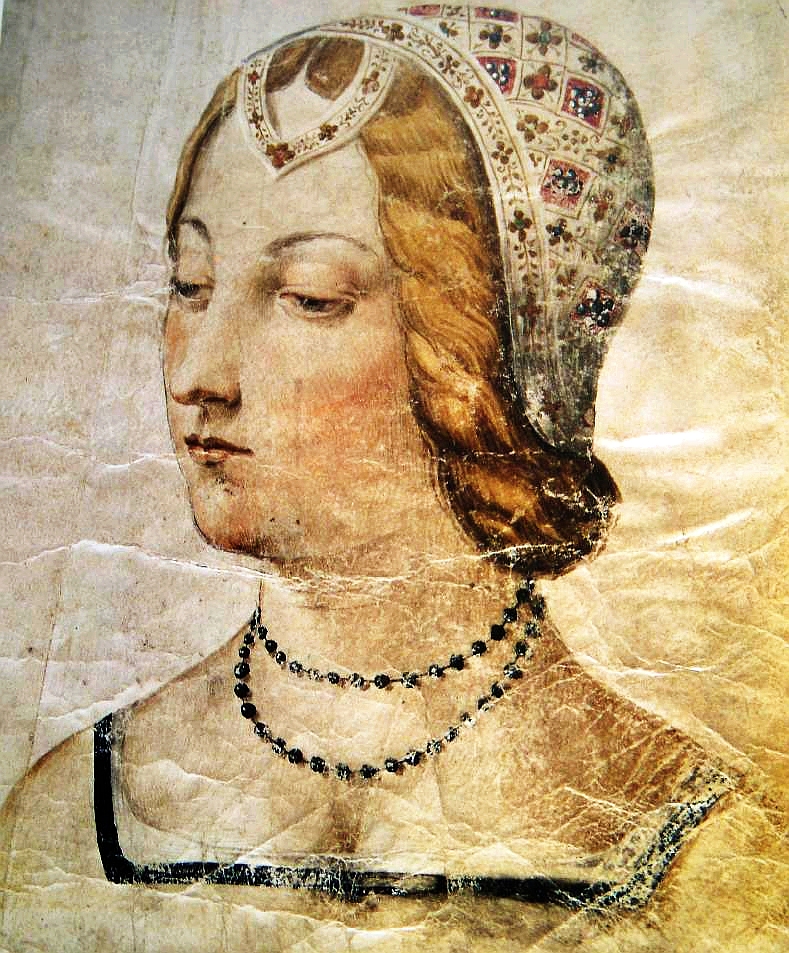
Liszt: Années de pèlerinage. Deuxième année: Italie
Beyond its religious connotation, there is more general meaning in the word pilgrimage. It is a journey towards your sources, your identity. Your roots, individual and collective - family, ethnicity, country, faith, culture, civilization. An attempt to understand where you come from, who you are, what is your purpose. Looking for your sources, finding them, meditating, experimenting, living them again.
You can make the journey in your young years, or you can make it later in life. At any age, after you made it, you are no more the same. For any age, it's an apprenticeship, a rite of passage. Think at Byron's poem: you start the journey a Childe, you end it a Knight. It remains in you, and later you will come again to it, in your memory this time, meditating, filtering, enriching its treasure. The journey can take place physically, it can be also imaginary. The essential is to make it in total openness, to accept the magic, to live the awe.
For Liszt, the pilgrimage was developed in three stages. It was firstly the journey to Switzerland, where, as he put it later, a real rapport, an inexplicable but undeniable communication was established with the phenomena of nature and their attendant sights. It was followed by the journey to Italy, in search of his European cultural roots. A search that was developed twofold. An exploration of the universe of Renaissance: visual arts and literature, having Raphael, Michelangelo, Petrarque and Dante as guides; and an exploration of the Italian musical world. I would speak about the third stage of Listzt's pilgrimage later, it deserves a separate discussion.
These stages of pilgrimage were later sublimated by Liszt in music: the three piano suites Années de pèlerinage, a remembrance of his journeys, meditating them again, exploring all their potentialities, living them again. Like in a religious experience, it is not about repetition: the time disappears, you are again there, in that moment, past becomes present, the moment is eternal.
And we, listeners of Liszt's music, are called to make our own journey: into the world of sounds, and through it toward the paradigms of Renaissance, and ultimately toward the simple and great paradigms of Universe. Goethe's Wilhelm Meister comes to mind: meditating the masterworks is also a rite of passage.
 Raphael: The Marriage of the Virgin (Spozalizio)
1504
oil on roundheaded panel
Pinacoteca di Brera, Milan
(http://en.wikipedia.org/wiki/File:Raffaello_-_Spozalizio_-_Web_Gallery_of_Art.jpg)
no copyright infringement intended
Liszt: Années de pèlerinage. Deuxième année: Italie
(Years of Pilgrimage. Second Year: Italy)
Part 1: Sposalizio, Lazar Berman, piano
(video by FranzLisztFerentz)
 Michelangelo: Il Pensieroso, 1531
(the tomb of Lorenzo de' Medici in the Medici Chapel)
(http://architecturalwatercolors.blogspot.com/2011/08/noli-me-tangere-rebuilding.html)
no copyright infringement intended
Quand Michel-Ange veut exprimer la méditation, la mélancolie, et nous en offrir les caractères universels et dominants, il est obligé de modérer le geste, d’atténuer le mouvement, de peur de représenter non plus le Penseroso, mais un certain homme et une certaine femme, de restreindre la portée de son œuvre en la particularisant.
[When Michelangelo wants to express the meditation, melancholy, and offer us the universal characters and dominant, he was forced to moderate the gesture, to mitigate the movement for fear nor represent the Penseroso, but a certain man and a certain woman, to restrict the scope of its work in the particularisant.]
Liszt: Années de pèlerinage. Deuxième année: Italie
(Years of Pilgrimage. Second Year: Italy)
Part 2: Il pensieroso, Wilhelm Kempff, piano
(video by ClassicalRecords)
 image from Opera nova amorosa, vol. 1
Strambotti, sonetti, capitoli, epistole et una disperata
Author: Nocturno Napolitano
no copyright infringement intended
Liszt: Années de pèlerinage. Deuxième année: Italie
(Years of Pilgrimage. Second Year: Italy)
Part 3: Canzonetta del Salvator Rosa, Wilhelm Kempff, piano
(this Canzonetta, Vado ben spesso cangiando loco, was in fact written by Giovanni Battista Bononcini, and not by Rosa)
(video by ClassicalRecords)
 Francesco Petrarca, Canzoniere e Trionfi, sec. XV (1480-1500 ca), Ms. 143, cc. 131v-132r
Istituzione Biblioteca Classense
no copyright infringement intended
Liszt: Années de pèlerinage. Deuxième année: Italie
(Years of Pilgrimage. Second Year: Italy)
Part 4: Sonetto 47 del Petrarca, Wilhelm Kempff, piano
(video by ClassicalRecords)
 Laura e Petrarca, miniatura dal Canzoniere
(http://areeweb.polito.it/didattica/polymath/htmlS/Interventi/Articoli/Petrarca/Petrarca.html)
no copyright infringement intended
Liszt: Années de pèlerinage. Deuxième année: Italie
(Years of Pilgrimage. Second Year: Italy)
Part 5: Sonetto 104 del Petrarca, Vladimir Horowitz, piano
(video by viennapianoplayer94)
 (http://www.misinta.it/biblioteca-digitale-misinta-2/1400-2/1470-petrarca-canzoniere-e-trionfi-miniato/)
no copyright infringement intended
Liszt: Années de pèlerinage. Deuxième année: Italie
(Years of Pilgrimage. Second Year: Italy)
Part 6: Sonetto 123 del Petrarca, Wilhelm Kempff, piano
(video by ClassicalRecords)
 Gustave Dorè: illustration for Dante's Inferno, Canto 29
(http://en.wikipedia.org/wiki/File:Inferno_Canto_29,_Gustave_Dor%C3%A8.jpg)
no copyright infringement intended
Liszt: Années de pèlerinage. Deuxième année: Italie
(Years of Pilgrimage. Second Year: Italy)
Part 7: Après une lecture de Dante: Fantasia Quasi Sonata, Libor Nováček, piano
(video by NovacekPianist)
 Venetian Fruitseller, Victorian print from 1874
(http://notesfromapianist.wordpress.com/2011/03/22/canzonetta-del-salvator-rosa-or-bononcini/)
no copyright infringement intended
Liszt: Années de pèlerinage. Deuxième année: Italie
(Years of Pilgrimage. Second Year: Italy)
Venezia e Napoli, Part 1: Gondoliera, Wilhelm Kempff, piano
(based on the song La biondina in gondoletta by Giovanni Battista Peruchinni)
(video by ClassicalRecords)

Liszt: Années de pèlerinage. Deuxième année: Italie
(Years of Pilgrimage. Second Year: Italy)
Venezia e Napoli, Part 2: Canzone, Jorge Bolet, piano
(based on the gondolier's song Nessun maggior dolore from Rossini's Otello)
(video by xper2xper)
 Tarantella
(http://www.napolisotterranea.org/lang/de/corsi_musica_napoletana390c.html)
no copyright infringement intended
Liszt: Années de pèlerinage. Deuxième année: Italie
(Years of Pilgrimage. Second Year: Italy)
Venezia e Napoli, Part 3: Tarantella, Igor Roma, piano
(uses themes by Guillaume-Louis Cottrau)
(video by ZioJafar)
(Liszt)
(Raphael)
(Michelangelo)
(the Bononcini's)
(Salvator Rosa)
(Petrarca)
(Dante)
You can make the journey in your young years, or you can make it later in life. At any age, after you made it, you are no more the same. For any age, it's an apprenticeship, a rite of passage. Think at Byron's poem: you start the journey a Childe, you end it a Knight. It remains in you, and later you will come again to it, in your memory this time, meditating, filtering, enriching its treasure. The journey can take place physically, it can be also imaginary. The essential is to make it in total openness, to accept the magic, to live the awe.
For Liszt, the pilgrimage was developed in three stages. It was firstly the journey to Switzerland, where, as he put it later, a real rapport, an inexplicable but undeniable communication was established with the phenomena of nature and their attendant sights. It was followed by the journey to Italy, in search of his European cultural roots. A search that was developed twofold. An exploration of the universe of Renaissance: visual arts and literature, having Raphael, Michelangelo, Petrarque and Dante as guides; and an exploration of the Italian musical world. I would speak about the third stage of Listzt's pilgrimage later, it deserves a separate discussion.
These stages of pilgrimage were later sublimated by Liszt in music: the three piano suites Années de pèlerinage, a remembrance of his journeys, meditating them again, exploring all their potentialities, living them again. Like in a religious experience, it is not about repetition: the time disappears, you are again there, in that moment, past becomes present, the moment is eternal.
And we, listeners of Liszt's music, are called to make our own journey: into the world of sounds, and through it toward the paradigms of Renaissance, and ultimately toward the simple and great paradigms of Universe. Goethe's Wilhelm Meister comes to mind: meditating the masterworks is also a rite of passage.

1504
oil on roundheaded panel
Pinacoteca di Brera, Milan
(http://en.wikipedia.org/wiki/File:Raffaello_-_Spozalizio_-_Web_Gallery_of_Art.jpg)
no copyright infringement intended
Liszt: Années de pèlerinage. Deuxième année: Italie
(Years of Pilgrimage. Second Year: Italy)
Part 1: Sposalizio, Lazar Berman, piano
(video by FranzLisztFerentz)

(the tomb of Lorenzo de' Medici in the Medici Chapel)
(http://architecturalwatercolors.blogspot.com/2011/08/noli-me-tangere-rebuilding.html)
no copyright infringement intended
Grato m’è il sonno, e più l’esser di sasso.
Mentre che il danno e la vergogna dura.
Non veder, non sentir m’è gran ventura
Però non mi destar, deh’—parla basso!
[Sleep, nay, being made of rock,
makes me happy whilst harm and shame endure.
It is a great adventure neither to see nor to hear.
However, disturb me not, pray—lower your voice!]
Quand Michel-Ange veut exprimer la méditation, la mélancolie, et nous en offrir les caractères universels et dominants, il est obligé de modérer le geste, d’atténuer le mouvement, de peur de représenter non plus le Penseroso, mais un certain homme et une certaine femme, de restreindre la portée de son œuvre en la particularisant.
[When Michelangelo wants to express the meditation, melancholy, and offer us the universal characters and dominant, he was forced to moderate the gesture, to mitigate the movement for fear nor represent the Penseroso, but a certain man and a certain woman, to restrict the scope of its work in the particularisant.]
Revue des Deux Mondes, XLVII-e Année, Troisième Période, Tome XXI, 1-er Mai 1877, pages 309, 310
Paris, Impr. J. Claye, A. Quantin et Cie, rue Saint Benoît
(http://books.google.com/books?id=Fn0IAAAAIAAJ&pg=PA309&lpg=PA309&dq=michel+ange+il+penseroso&source=bl&ots=jpus6u61nA&sig=wddf5Fy5R8LUxHFFEFnH6H5kJtI&hl=en&sa=X&ei=7KksUMbnI4qIygGM6IBA&ved=0CFcQ6AEwCA#v=onepage&q=michel%20ange%20il%20penseroso&f=false)
Paris, Impr. J. Claye, A. Quantin et Cie, rue Saint Benoît
(http://books.google.com/books?id=Fn0IAAAAIAAJ&pg=PA309&lpg=PA309&dq=michel+ange+il+penseroso&source=bl&ots=jpus6u61nA&sig=wddf5Fy5R8LUxHFFEFnH6H5kJtI&hl=en&sa=X&ei=7KksUMbnI4qIygGM6IBA&ved=0CFcQ6AEwCA#v=onepage&q=michel%20ange%20il%20penseroso&f=false)
Liszt: Années de pèlerinage. Deuxième année: Italie
(Years of Pilgrimage. Second Year: Italy)
Part 2: Il pensieroso, Wilhelm Kempff, piano
(video by ClassicalRecords)

Strambotti, sonetti, capitoli, epistole et una disperata
Author: Nocturno Napolitano
no copyright infringement intended
Liszt: Années de pèlerinage. Deuxième année: Italie
(Years of Pilgrimage. Second Year: Italy)
Part 3: Canzonetta del Salvator Rosa, Wilhelm Kempff, piano
(this Canzonetta, Vado ben spesso cangiando loco, was in fact written by Giovanni Battista Bononcini, and not by Rosa)
(video by ClassicalRecords)

Istituzione Biblioteca Classense
no copyright infringement intended
Liszt: Années de pèlerinage. Deuxième année: Italie
(Years of Pilgrimage. Second Year: Italy)
Part 4: Sonetto 47 del Petrarca, Wilhelm Kempff, piano
(video by ClassicalRecords)
(http://areeweb.polito.it/didattica/polymath/htmlS/Interventi/Articoli/Petrarca/Petrarca.html)
no copyright infringement intended
Liszt: Années de pèlerinage. Deuxième année: Italie
(Years of Pilgrimage. Second Year: Italy)
Part 5: Sonetto 104 del Petrarca, Vladimir Horowitz, piano
(video by viennapianoplayer94)

no copyright infringement intended
Liszt: Années de pèlerinage. Deuxième année: Italie
(Years of Pilgrimage. Second Year: Italy)
Part 6: Sonetto 123 del Petrarca, Wilhelm Kempff, piano
(video by ClassicalRecords)

(http://en.wikipedia.org/wiki/File:Inferno_Canto_29,_Gustave_Dor%C3%A8.jpg)
no copyright infringement intended
Liszt: Années de pèlerinage. Deuxième année: Italie
(Years of Pilgrimage. Second Year: Italy)
Part 7: Après une lecture de Dante: Fantasia Quasi Sonata, Libor Nováček, piano
(video by NovacekPianist)

(http://notesfromapianist.wordpress.com/2011/03/22/canzonetta-del-salvator-rosa-or-bononcini/)
no copyright infringement intended
Liszt: Années de pèlerinage. Deuxième année: Italie
(Years of Pilgrimage. Second Year: Italy)
Venezia e Napoli, Part 1: Gondoliera, Wilhelm Kempff, piano
(based on the song La biondina in gondoletta by Giovanni Battista Peruchinni)
(video by ClassicalRecords)

Pulcinella
(http://testispartiti.fotoblog.it/archive/2010/05/22/canzoni-napoletane-s.html)
no copyright infringement intended
(http://testispartiti.fotoblog.it/archive/2010/05/22/canzoni-napoletane-s.html)
no copyright infringement intended
Liszt: Années de pèlerinage. Deuxième année: Italie
(Years of Pilgrimage. Second Year: Italy)
Venezia e Napoli, Part 2: Canzone, Jorge Bolet, piano
(based on the gondolier's song Nessun maggior dolore from Rossini's Otello)
(video by xper2xper)

(http://www.napolisotterranea.org/lang/de/corsi_musica_napoletana390c.html)
no copyright infringement intended
Liszt: Années de pèlerinage. Deuxième année: Italie
(Years of Pilgrimage. Second Year: Italy)
Venezia e Napoli, Part 3: Tarantella, Igor Roma, piano
(uses themes by Guillaume-Louis Cottrau)
(video by ZioJafar)
(Liszt)
(Raphael)
(Michelangelo)
(the Bononcini's)
(Salvator Rosa)
(Petrarca)
(Dante)
Labels: Bononcini, Dante, Liszt, Michelangelo, Petrarca, Raphael, Salvator Rosa
posted by Pierre Radulescu at
4:45 AM
|
0 comments