Updates, Live

Saturday, November 27, 2010

Rauschenberg at Gagosian

Short Circuit (Combine Painting), 1955; Greenhouse (Combine), 1950; and Aen Floga (Combine Painting), 1962

Rauschenberg was at a time within the Pop Art, but he went beyond. For him what mattered was the answer to this question: can the relations between objects go beyond the obvious?

There is a Rauschenberg show at Gagosian these days. Go see it if you can. I would love to be in Chelsea to hang around on the 21st Street, to try some photos, and to write about them.

The images in this post are captured from a review of the show in today's NY Times.


Untitled (Elemental Sculpture), 1953


Dylaby (Combine Painting), 1962, and Three Traps for Medea, 1959


Small sculptures


Untitled (Early Egyptian), 1973


Pilot (Jammer), a fabric piece from 1976


Palladian Xmas (Spread), 1980


(Contemporary Art)

Labels:

Thursday, December 11, 2008

Rauschenberg: Dam

Robert Rauschenberg - Dam, 1959
oil paint, photomechanical reproduction, cloth, and metal object on canvas


(Hirshhorn Museum)

(Contemporary Art)

Labels:

Monday, October 06, 2008

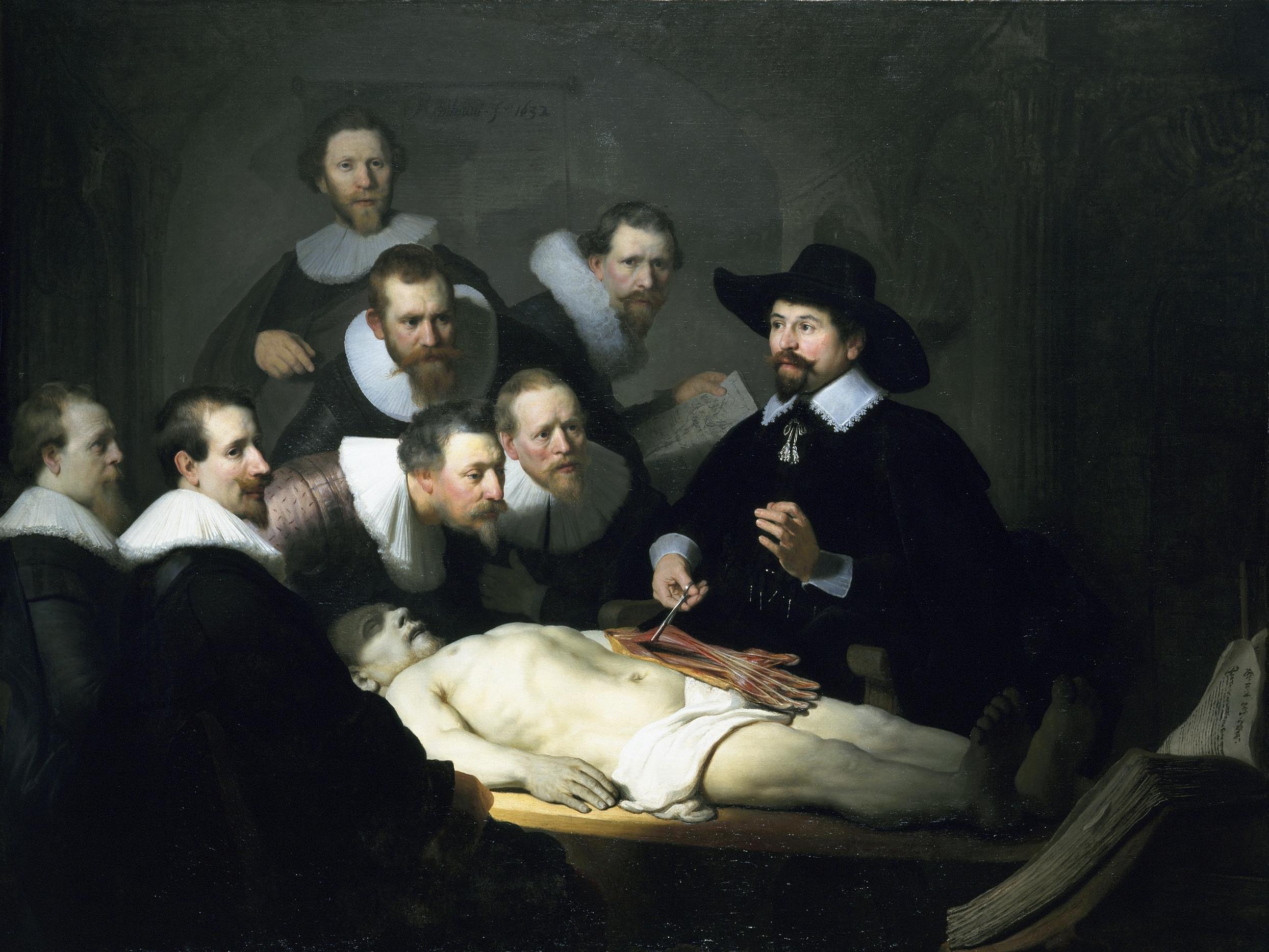
Anatomy of a Rauschenberg

Robert Rauschenberg - Booster, 1967
lithograph and screenprint


Or, you could say, The Anatomy Lesson according to Rauschenberg.


(Contemporary Art)

(Washington DC National Gallery of Art)

Labels:

Friday, May 16, 2008

Again about Rauschenberg

David Byrne published in today's NY Times a very warm article about Rauschenberg (Bob the Builder). Here it is:

I approached Bob Rauschenberg in the mid-’80s to design a cover for the Talking Heads record Speaking in Tongues. I had recently seen some of his black-and-white photo collages at Leo Castelli’s gallery on West Broadway and thought they were amazing, and I wondered what he would do with an LP cover.

It was not unusual for a pop musician to approach a fine artist in those days; other contemporary artists had collaborated with pop bands in the late ’60s and early ’70s. I was pleasantly surprised, though, when Bob, who died this week, eschewed simply reproducing a work on the album jacket in favor of re-envisioning what the whole LP package could be.

His package consisted of a conceptual collage piece in which the color separation layers — the cyan, magenta and yellow images that combined to make one full-color image — were, well, deconstructed. Only by rotating the LP and the separate plastic disc could one see — and then only intermittently — the three-color images included in the collage. It was a transparent explication of how the three-color process works, yet in this case, one could never see all the full-color images at the same time, as Bob had perversely scrambled the separations.

Needless to say, the design posed some production problems for Warner Bros. Records, so it ended up a limited, but very large, 50,000-copy edition, released in addition to the regular, mass-produced version. Luckily, everyone shared in the crazy idea of making radical art that could also be popular. Nowadays there might be concerns about the return on investment, but at that time the label let these matters slide.

I later became friends with Bob and his collaborators, and it was an incredible world to enter. I sensed immediately that Bob had never become cynical about his work. Even after he found success, he continued to see the world as a work of art that simply hadn’t been framed yet.

Bob’s way of talking was a challenge to many — he spoke in constant puns and metaphors, like a stream-of-consciousness poet, and one had to suspend traditional forms of speech, understanding and discourse and go with the flow. It was liberating, if you could hang in there, and never mundane. Conversation was like one of his pieces: a crazy mishmash of images, multiple layers and references, and a spray of allusions that were simultaneously silly, profound and beautiful — he was the Neal Cassady of the art world. His life, and his relation to those around him, was just like his work; there was no separation and he never went out of character. The love of the world that was in the work was also in the man.

Bob drank heavily. In the ’80s, I discovered him once at his studio on Lafayette Street, in mid-afternoon, with a glass of Jack in his hand. I, rock ’n’ roll guy, was amazed to see an established artist living one aspect of the rock ’n’ roll life much more intensely than I ever dared. I did wonder if some of the beautiful jumps and leaps in his conversation were partly alcohol-related, but his output remained transcendent, so I figured he was managing it.

Being around Bob was often like being on some kind of ecstatic drug — he inspired those around him to not only think outside of the box, but to question the box’s very existence. He was driven to challenge himself. For his globe-spanning project, Rauschenberg Overseas Cultural Interchange, Bob collaborated with artisans and small factories in Chile, China, Cuba, Germany, Japan, Malaysia, Mexico, the Soviet Union, Tibet and Venezuela over many years. In pre-it is glorious to be rich China, Bob worked with the oldest paper manufacturer in the world, while in India he worked with mud-manure straw clay. Suspicious of Bob’s motives, some countries forced him to wade through red tape, and his open attitude toward materials and creativity occasionally confounded his traditional artisan collaborators. The results, though, were sometimes wonderful, especially when he managed to break his own mold.

Bob was extraordinarily generous. I don’t mean he gave away art — though he did that, too — but he was generous with his time and with his ideas and spirit. He started Change Inc., a foundation that awards grants to emerging artists who can’t pay their rent, utility or medical bills. No questions asked.

He was, of course, famous for making art out of everyday junk he found on the street. One summer I went down to Captiva Island, Fla., where Bob had his main studio. I stayed across the road in one of the houses he had saved, and I spent a week or so writing a few songs. When I returned to New York, I left behind a pair of worn-out tennis shoes. A ghostly image of them showed up in a painting not long after.

Bob’s generosity of vision was, it seemed to me, more profound than the financial kind. His openness and way of seeing was contagious and inspired others in their own work — not to imitate and make pseudo-Rauschenbergs, but to see the whole world as a work of art. As corny as that may sound, that’s what he sometimes did
.

(Just a few words about David Byrne - some spell it Byme, so take it easy - he is a musician and a visual artist, best known for founding and being the songwriter of Talking Heads band in the 1980s. The guy is a SubGenii, whatever that means.)

(Contemporary Art)

Labels:

Contemporary Art

Jean Dubuffet - La Ronde des Images, 1977
acrylic on paper on canvas
Washington National Gallery of Art


Damien Hirst - Pharmacy, 1992
Mixed Media Installation
Tate Gallery


(By Brakhage)

Labels: , , ,

Wednesday, May 14, 2008

Rauschenberg and Dance

Ashley Chen, center, of the Merce Cunningham Dance Company in Interscape (2000), in front of a backdrop designed by Robert Rauschenberg (NY Times)


Dance is sublimated ritual, it's our need to replay our fundamental story again and again. Perhaps word is fundamentally the same. Language of words, language of gestures, language of sounds, language of images: great artists look sometimes toward the convergence of languages. Rauschenberg, Cunningham, Cage: the stage designer, the composer, the choreographer, in a tumultuous adventure of creation.

This is an image of Rauschenberg and Cunningham, from 2000. The alchemist of the mundane and the greatest living choreographer. Read this article by Alastair Macaulay in today's NY Times, about Rauschenberg and Dance, Partners for Life:

Something inherently theatrical about Robert Rauschenberg’s talent — always evident in his radical feeling for color, light, composition and new ingredients and juxtapositions —prompted him to his boldest and freshest conceptions when he worked onstage. From the early 1950s until 2007 he designed for dance. And in the late ’50s and early ’60s, when he first came to fame, he was recurrently (at times constantly) occupied in dance theater.

When he won the international grand prize at the Venice Biennale in 1964, he said he regarded the Merce Cunningham Dance Company as his biggest canvas. Although the remark offended some in Cunningham circles (primarily the composer John Cage, who seems to have felt it sounded too proprietorial), it was completely justified. At that time there was no better place to see the range of Mr. Rauschenberg’s inventiveness than the Cunningham repertory.

Mr. Rauschenberg wasn’t just the designer of most pieces Mr. Cunningham had choreographed in the previous 10 years; he was also a permanent colleague. He toured America and, in 1964, the world as stage manager to the Cunningham company, adjusting the lighting and costumes, making several of the dancers into his long-term friends, helping turn the itinerary of a dance company into a fulcrum of ideas.

In 1954 Mr. Rauschenberg was the first stage designer to follow the principle of artistic independence already established by Mr. Cunningham and Cage. All he needed to know was which dancer to design costumes for, and if Mr. Cunningham had any further specifications. So when Mr. Cunningham asked (in 1954) for décor around which the dancers could move, Mr. Rauschenberg placed a large red free-standing combine center stage in Minutiae; though the choreography has not survived, the décor is still used in some Cunningham Events.

Sometimes Mr. Cunningham gave not specifications but poetic clues. For example, for Winterbranch (1964) he said to Mr. Rauschenberg, Think of the night as if it were day. Mr. Rauschenberg’s response was to think of images like being caught in the headlights of a car, and he made all-black costumes and lighting that sometimes threw the stage into darkness while viewers were shielding their eyes from the light.

When Mr. Cunningham was experimenting with new definitions of stage space in Summerspace (1958), suggesting both that the stage was just a section of a vaster landscape and that the mood was that of a summer idyll, Mr. Rauschenberg responded with impressionistic pointillism. The costumes of the dancers matched the backdrop view in near camouflage, and the work evoked scenes by Monet and Seurat while also suggesting a wildlife documentary.

In Crises (1960 - the music of Conlon Nancarrow,
Rhythm Studies for Player Piano) the dancers wore single-color all-over tights that glowed fiercely against the surrounding blackness. In such works Mr. Rauschenberg also became one of the all-time masters of theatrical lighting.

Mr. Rauschenberg had come to know the young Paul Taylor in 1953, while Mr. Taylor was a Cunningham dancer. When Mr. Taylor began to choreograph in the succeeding years, Mr. Rauschenberg was his designer; works like Three Epitaphs (1956, all-black costumes again) survive in Taylor repertory today. In the 1960s Mr. Rauschenberg was involved in the radical dance-theater experiments at and around Judson Memorial Church in Greenwich Village and was close to Cunningham-connected experimentalists like Carolyn Brown, Viola Farber and Steve Paxton; he even choreographed himself.

Mr. Rauschenberg’s full-time connection to the Cunningham company ended with its 1964 world tour. Though he and Cage had stimulated each other profoundly and were in many ways like-minded, their egos had clashed; Mr. Rauschenberg’s my biggest canvas remark sounded like colonization in a dance theater where the point was independence.

But others led him back to dance theater, nobody more beautifully than Trisha Brown. Her Set and Reset (1983) was an instant masterpiece, largely thanks to Mr. Rauschenberg’s astonishingly imaginative designs. Three screens simultaneously broadcast separate video collages in black and white (more than 20 years before a video component became the norm in new choreography), while the dancers rippled around the stage in part-translucent costumes marked with gray and black figures that resembled newsprint.

Mr. Rauschenberg and Mr. Cunningham did collaborate again — though collaboration may have always been too tight a word for the freedom they gave each other — on several pieces over the decades. The last of these was only last October, XOVER (pronounced Crossover), which had its premiere at the Hopkins Center at Dartmouth College. (It has yet to be seen in New York or most other cities.) The white costumes against a largely white backdrop recall the all-white paintings of 50 years before; the nonwhite parts of the backdrop, combining silk-screen photography and painting, connect isolated images (a bicycle, a fence, an industrial view) with beautiful color and details of light.

More glorious yet — the most marvelous Rauschenberg stage designs I have seen, and supremely theatrical — were what he made for Mr. Cunningham’s Interscape (2000). This work begins with a black-and-white curtain that is already a classic Rauschenberg collage of eclectic images: it proves translucent, and lighting allows the dancers to be seen warming up onstage.

When that curtain lifts, however, the backdrop is a full-color version of the same collage, so that we seem to have gone from a shadow realm to a new plane of more intense being, in which the main choreography occurs. Each costume was individual (Mr. Cunningham said he knew the dancers were happy from the noises he could hear them making as they returned from their fittings) and demonstrated Mr. Rauschenberg’s extraordinary feeling for color combinations. (One stinging green hangs in the memory.)

Impresarios have occasionally assembled programs that illustrate Picasso and the Dance, but Mr. Rauschenberg’s work for dance was far more prolific than Picasso’s, as a whole season could be presented to demonstrate. If only that could happen, its range of designs — from Three Epitaphs to Summerspace, from Set and Reset to Interscape, from Crises to Glacial Decoy (another Trisha Brown collaboration) — would easily establish his place in the forefront of architects of theater.


Members of the Merce Cunningham Dance Company in Minutiae (1954). The choreography has not survived, but Robert Rauschenberg's décor has (NY Times)


(Contemporary Art)

Labels:

Tuesday, May 13, 2008

Robert Rauschenberg passed away


John Cage once said about the art of Robert Rauschenberg, Beauty is now underfoot wherever we take the trouble to look.

Rauschenberg died last night. He was 82.

Here is an article by Michael Kimmelman from today's NY Times:

Robert Rauschenberg, the irrepressibly prolific American artist who time and again reshaped art in the 20th century, died Monday night. He was 82.

Mr. Rauschenberg’s work gave new meaning to sculpture. Canyon, for instance, consisted of a stuffed bald eagle attached to a canvas.

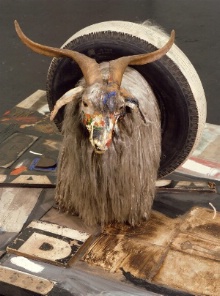
Monogram was a stuffed Angora goat girdled by a tire atop a painted panel.

Bed entailed a quilt, sheet and pillow, slathered with paint, as if soaked in blood, framed on the wall. They all became icons of postwar modernism.

A painter, photographer, printmaker, choreographer, onstage performer, set designer and, in later years, even a composer, Mr. Rauschenberg defied the traditional idea that an artist stick to one medium or style. He pushed, prodded and sometimes reconceived all the mediums in which he worked.

Building on the legacies of Marcel Duchamp, Kurt Schwitters, Joseph Cornell and others, he thereby helped to obscure the lines between painting and sculpture, painting and photography, photography and printmaking, sculpture and photography, sculpture and dance, sculpture and technology, technology and performance art — not to mention between art and life.

Mr. Rauschenberg was also instrumental in pushing American art onward from Abstract Expressionism, the dominant movement when he emerged during the early 1950s. He became a transformative link between artists like Jackson Pollock and Willem de Kooning and those who came next, artists identified with Pop, Conceptualism, Happenings, Process Art and other new kinds of art in which he played a signal role.

No American artist, Jasper Johns once said, invented more than Mr. Rauschenberg. Mr. Johns, John Cage, Merce Cunningham and Mr. Rauschenberg, without sharing exactly the same point of view, collectively defined this new era of experimentation in American culture. Apropos of Mr. Rauschenberg, Cage once said, Beauty is now underfoot wherever we take the trouble to look.

Cage meant that people had come to see, through Mr. Rauschenberg’s efforts, not just that anything, including junk on the street, could be the stuff of art (this wasn’t itself new), but that it could be the stuff of an art aspiring to be beautiful — that there was a potential poetics even in consumer glut, which Mr. Rauschenberg celebrated. I really feel sorry for people who think things like soap dishes or mirrors or Coke bottles are ugly, he once said, because they’re surrounded by things like that all day long, and it must make them miserable.

The remark reflected the optimism and generosity of spirit that Mr. Rauschenberg became known for. His work was likened to a Saint Bernard: uninhibited and mostly good-natured. He could be the same way in person. When he became rich, he gave millions of dollars to charities for women, children, medical research, other artists and Democratic politicians.

A brash, garrulous, hard-drinking, open-faced Southerner, he had a charm and peculiar Delphic felicity with language that nevertheless masked a complex personality and an equally multilayered emotional approach to art, which evolved as his stature did. Having begun by making quirky small-scale assemblages out of junk he found on the street in downtown Manhattan, he spent increasing time in his later years, after he had become successful and famous, on vast international, ambassadorial-like projects and collaborations.

Conceived in his immense studio on the island of Captiva, Fla., these projects were of enormous size and ambition; for many years he worked on a project that grew literally to exceed the length of its title, The 1/4 Mile or 2 Furlong Piece. They generally did not live up to his earlier achievements. Even so, he maintained an equanimity toward the results. Protean productivity went along with risk, he believed, and risk sometimes meant failure.

The process — an improvisatory, counterintuitive way of doing things — was always what mattered most to him. Screwing things up is a virtue, he said when he was 74. Being correct is never the point. I have an almost fanatically correct assistant, and by the time she re-spells my words and corrects my punctuation, I can’t read what I wrote. Being right can stop all the momentum of a very interesting idea.

This attitude also inclined him, as the painter Jack Tworkov once said, to see beyond what others have decided should be the limits of art.

He keeps asking the question — and it’s a terrific question philosophically, whether or not the results are great art, Tworkov said, and his asking it has influenced a whole generation of artists.

That generation was the one that broke from Pollock and company. Mr. Rauschenberg maintained a deep but mischievous respect for these Abstract Expressionist heroes like de Kooning and Barnett Newman. Famously, he once painstakingly erased a drawing by de Kooning, an act both of destruction and devotion. Critics regarded the all-black paintings and all-red paintings he made in the early 1950s as spoofs of de Kooning and Pollock. The paintings had roiling, bubbled surfaces made from the torn scraps of newspapers embedded in paint.

But these were just as much homages as they were parodies. De Kooning, himself a parodist, had incorporated bits of newspapers as flotsam in pictures, and Pollock stuck cigarette butts to canvases.

Mr. Rauschenberg’s Automobile Tire Print, from the early 50’s — resulting from Cage’s driving an inked tire of a Model A Ford over 20 sheets of white paper — poked fun at Newman’s famous zip paintings.

At the same time, Mr. Rauschenberg was expanding on Newman’s art. The tire print transformed Newman’s zip — an abstract line against a monochrome backdrop with spiritual pretensions — into an artifact of everyday culture, which for Mr. Rauschenberg had its own transcendent dimension.

Mr. Rauschenberg frequently alluded to cars and spaceships, even incorporating real tires and bicycles, into his art. This partly reflected his own restless, peripatetic imagination. The idea of movement was logically extended when he took up dance and performance.

There was, beneath this, a darkness to many of his works, notwithstanding their irreverence. Bed was gothic. The all-black paintings were solemn and shuttered. The red paintings looked charred, with strips of fabric, akin to bandages, from which paint dripped, like blood.
Interview, which resembled a cabinet or closet with a door, enclosing photographs of toreros, a pinup, a Michelangelo nude, a fork and a softball, suggested some black-humored encoded erotic message.

There were many other images of downtrodden and lonely people, rapt in thought; pictures of ancient frescoes, out of focus as if half remembered; photographs of forlorn, neglected places; bits and pieces of faraway places conveying a kind of nostalgia or remoteness. In bringing these things together, the art implied consolation.

Mr. Rauschenberg, who knew that not everybody found it easy to grasp the open-endedness of his work, once described to the writer Calvin Tomkins an encounter with a woman who had reacted skeptically to Monogram and Bed in his 1963 retrospective at the Jewish Museum, one of the events that secured Mr. Rauschenberg’s reputation: To her, all my decisions seemed absolutely arbitrary — as though I could just as well have selected anything at all — and therefore there was no meaning, and that made it ugly.

So I told her that if I were to describe the way she was dressed, it might sound very much like what she’d been saying. For instance, she had feathers on her head. And she had this enamel brooch with a picture of ‘The Blue Boy’ on it pinned to her breast. And around her neck she had on what she would call mink but what could also be described as the skin of a dead animal. Well, at first she was a little offended by this, I think, but then later she came back and said she was beginning to understand.

Milton Ernest Rauschenberg was born on Oct. 22, 1925, in Port Arthur, Tex., a small refinery town where it was very easy to grow up without ever seeing a painting, he said. (In adulthood he renamed himself Robert.) His grandfather, a doctor who immigrated from Germany, had settled in Texas and married a full-blooded Cherokee. His father, Ernest, worked for a local utility company. The family lived so frugally that his mother, Dora, made him shirts out of scraps of fabric. Once she made herself a skirt out of the back of the suit that her younger brother was buried in. She didn’t want the material to go to waste.

For his high school graduation present, Mr. Rauschenberg wanted a ready-made shirt, his first. All this shaped his art eventually. A decade or so later he made history with his own assemblages of scraps and ready-mades: sculptures and music boxes made of packing crates, rocks and rope; and paintings like “Yoicks” sewn from fabric strips. He loved making something out of nothing.

He studied pharmacology briefly at the University of Texas in Austin before he was drafted during World War II. He saw his first paintings at the Huntington Gallery in California while stationed in San Diego as a medical technician in the Navy Hospital Corps, and it occurred to him that it was possible to become a painter.

He attended the Kansas City Art Institute on the GI Bill, traveled to Paris and enrolled at the Académie Julian, where he met Susan Weil, a young painter from New York who was to enter Black Mountain College in North Carolina. Having read about and come to admire Josef Albers, then the head of fine arts at Black Mountain, Mr. Rauschenberg saved enough money to join her.

Albers, a disciplinarian and strict modernist who, shocked by his student, later disavowed ever even knowing Mr. Rauschenberg, was on the other hand recalled by Mr. Rauschenberg as a beautiful teacher and an impossible person.

He wasn’t easy to talk to, and I found his criticism so excruciating and so devastating that I never asked for it, Mr. Rauschenberg added. Years later, though, I’m still learning what he taught me.

Among other things, he learned to maintain an open mind toward materials and new media, which Albers endorsed. Mr. Rauschenberg also gained a respect for the grid as an essential compositional organizing tool.

For a while, he moved between New York, where he studied at the Art Students League with Vaclav Vytlacil and Morris Kantor, and Black Mountain. During the spring of 1950, he and Ms. Weil married. The marriage lasted two years, during which they had a son, Christopher, who survives him along with Mr. Rauschenberg’s companion, Darryl Pottorf.

Mr. Rauschenberg experimented at the time with blueprint paper to produce silhouette negatives. The pictures were published in Life magazine in 1951; after that Mr. Rauschenberg was given his first solo show, at the influential Betty Parsons Gallery. Everyone was trying to give up European aesthetics, he recalled, meaning Picasso, the Surrealists and Matisse. That was the struggle, and it was reflected in the fear of collectors and critics. John Cage said that fear in life is the fear of change. If I may add to that: nothing can avoid changing. It’s the only thing you can count on. Because life doesn’t have any other possibility, everyone can be measured by his adaptability to change.

Cage acquired a painting from the Betty Parsons show. Aside from that, Mr. Rauschenberg sold absolutely nothing. Grateful, he agreed to host Cage at his loft. As Mr. Rauschenberg liked to tell the story, the only place to sit was on a mattress. Cage started to itch. He called Mr. Rauschenberg afterward to tell him that his mattress must have bedbugs and that, as Cage was going away for a while, Mr. Rauschenberg could stay at his place. Mr. Rauschenberg accepted the offer. In return, he decided he would touch up the painting Cage had acquired, as a kind of thank you, painting it all-black, being in the midst of his new, all-black period. When Cage returned, he was not amused.

We both thought, ‘Here was somebody crazier than I am,' Mr. Rauschenberg recalled. In 1952 Mr. Rauschenberg switched to all-white paintings, which were, in retrospect, spiritually akin to Cage’s famous silent piece of music, during which a pianist sits for 4 minutes and 33 seconds at the keyboard without making a sound. Mr. Rauschenberg’s paintings, like the music, in a sense became both Rorschachs and backdrops for ambient, random events like passing shadows. I always thought of the white paintings as being not passive but very — well, hypersensitive, he told an interviewer in 1963. So that people could look at them and almost see how many people were in the room by the shadows cast, or what time of day it was.

Kicking around Europe and North Africa with the artist Cy Twombly for a few months after that, he began to collect and assemble objects — bits of rope, stones, sticks, bones — which he showed to a dealer in Rome who exhibited them under the title scatole contemplative, or thought boxes. They were shown in Florence, where an outraged critic suggested that Mr. Rauschenberg toss them in the river. The artist thought that sounded like a good idea. So, saving a few scatole for himself and friends, he found a secluded spot on the Arno. ‘I took your advice, he wrote to the critic.

Yet the scatole were crucial to his development, setting the stage for bigger, more elaborate assemblages like Monogram. Back in New York, Mr. Rauschenberg showed his all-black and all-white paintings, then his erased de Kooning, which de Kooning had given to him to erase, a gesture that Mr. Rauschenberg found astonishingly generous, all of which enhanced his reputation as the new enfant terrible of the art world.

Around that time he also met Mr. Johns, then unknown, who had a studio in the same building on Pearl Street where Mr. Rauschenberg had a loft. The intimacy of their relationship over the next years, a consuming subject for later biographers and historians, coincided with the production by the two of them of some of the most groundbreaking works of postwar art.

In Mr. Rauschenberg’s famous words, they gave each other permission to do what we wanted. Living together in a succession of lofts in Lower Manhattan until the 1960’s, they exchanged ideas and supported themselves designing window displays for Tiffany & Company and Bonwit Teller under the collaborative pseudonym Matson Jones.

Along with the combines, Mr. Rauschenberg in that period developed a transfer drawing technique, dissolving printed images from newspapers and magazines with a solvent and then rubbing them onto paper with a pencil.
The process, used for works like 34 Drawings for Dante’s ‘Inferno’, created the impression of something fugitive, exquisite and secretive. Perhaps there was an autobiographical and sensual aspect to this. It let him combine images on a surface to a kind of surreal effect, which became the basis for works he made throughout his later career, when he adapted the transfer method to canvas.

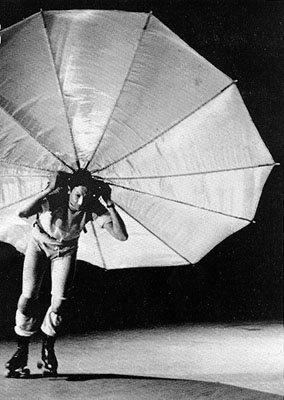
Instrumental in this technical evolution back then was Tatyana Grossman, who encouraged and guided him as he made prints at her workshop, Universal Limited Art Editions, on Long Island; he also began a long relationship with the Gemini G.E.L. workshop in Los Angeles, producing lithographs like the 1970 Stoned Moon series, with its references to the moon landing. His association with theater and dance had already begun by the 1950s, when he began designing sets and costumes for Cunningham, Paul Taylor and Trisha Brown and for his own productions. In 1963, he choreographed Pelican, in which he performed on roller skates wearing a parachute and helmet of his design to the accompaniment of a taped collage of sound. This fascination both with collaboration and with mixing art with technologies dovetailed with yet another endeavor. With Billy Klüver, an engineer at Bell Telephone Laboratories, he started Experiments in Art and Technology, a nonprofit foundation to foster collaborations between artists and scientists.

In 1964, he toured Europe and Asia with the Merce Cunningham Dance Company, the same year he exhibited at the Whitechapel Gallery in London and the Venice Biennale as the United States representative. That sealed his international renown. The Sunday Telegraph in London hailed him as the most important American artist since Jackson Pollock. He walked off with the international grand prize in Venice, the first modern American to win it. Mr. Rauschenberg had, almost despite himself, become an institution.

Major exhibitions followed every decade after that, including one at the Pompidou Center in Paris in 1981, another at the Guggenheim in 1997 and yet another that landed at the Metropolitan Museum in 2005.

When he wasn’t traveling in later years, he was in Captiva, a slender island off Florida’s Gulf coast, living at first in a modest beach house and working out of a small studio. In time he became Captiva’s biggest residential landowner while also maintaining a town house in Greenwich Village back in New York. He acquired the land in Captiva by buying adjacent properties from elderly neighbors whom he let live rent-free in their houses, which he maintained for them. He accumulated 35 acres, 1,000 feet of beach front and nine houses and studios, including a 17,000-square-foot two-story studio overlooking a swimming pool. He owned almost all that remained of tropical jungle on the island.

I usually work in a direction until I know how to do it, then I stop, he said in an interview in the giant studio on Captiva in 2000. At the time that I am bored or understand — I use those words interchangeably — another appetite has formed. A lot of people try to think up ideas. I’m not one. I’d rather accept the irresistible possibilities of what I can’t ignore.

He added: Anything you do will be an abuse of somebody else’s aesthetics. I think you’re born an artist or not. I couldn’t have learned it. And I hope I never do because knowing more only encourages your limitations.


(Contemporary Art)

Labels: