Updates, Live

Sunday, May 12, 2019

Emily Dickinson: Four Poems having Kate Scott Turner in Mind

Emily Dickinson and Kate Scott Turner
unauthenticated portrait, c. 1859
(image source: wiki)
no copyright infringement intended


1.
Heart, not so heavy as mine
Wending late home -
As it passed my window
Whistled itself a tune -
A careless snatch - a ballad -
A ditty of the street -
Yet to my irritated Ear
An Anodyne so sweet -
It was as if a Bobolink
Sauntering this way
Carolled, and paused, and carolled -
Then bubbled slow away!
It was as if a chirping brook
Upon a dusty way -
Set bleeding feet to minuets
Without the knowing why!
Tomorrow, night will come again -
Perhaps, weary and sore -
Ah Bugle! By my window
I pray you pass once more.


2.
It cant be "Summer"!
That - got through!
It's early - yet- for "Spring"!
There's that long town of White - to cross -
Before the Blackbirds sing!
It cant be "Dying"!
It's too Rouge -
The Dead shall go in White -
So Sunet shuts my question down
With Cuffs of Chrysolite!


3.
When Katie walks, this simple pair accompany her side,
When Katie runs unwearied they follow on the road,
When Katie kneels, their loving hands still clasp her pious knee -
Ah! Katie! Smile at Fortune, with two so knit to thee!


4.
There are two Ripenings - one - of sight -
Whose forces Spheric wind
Until the Velvet product
Drop spicy to the ground -
A homelier maturing -
A process in the Bur -
That teeth of Frosts alone disclose
In far October Air.


(Emily Dickinson)

Labels:

Saturday, April 27, 2019

Emily Dickinson, Wild Nights

The Manuscript of Wild Nights
(image source: Libriantichionline)
no copyright infringement intended


Wild nights! Wild nights!
Were I with thee,
Wild nights should be
Our luxury!

Futile the winds
To a heart in port,
Done with the compass,
Done with the chart.

Rowing in Eden!
Ah! the sea!
Might I but moor
To-night in thee!
(source: The Culture Trip)


(Emily Dickinson)

Labels:

Friday, March 02, 2018

Emily Dickinson, To Make a Prairie

(image source: To Make a Prairie)
no copyright infringement intended

To make a prairie it takes a clover and one bee,
One clover, and a bee.
And revery.
The revery alone will do,
If bees are few.


Encontré una traducción al español en Descontexto , la revista literaria editada por Juan Carlos Villavicencio y Carlos Almonte.


Para hacer una pradera se necesita un trébol y una abeja,
un trébol y una abeja.
Y ensueño.
El ensueño solo bastaría
si son pocas las abejas.


(Emily Dickinson)

(Juan Carlos Villavicencio)

Labels: ,

Tuesday, September 17, 2013

Emily Dickinson: A Narrow Fellow in the Grass


... a poem that has more layers than a toddler going out into a snowstorm. Every element of the poem calls for our attention. The dashes, the question mark, the capitalization, and the strange wording are all important, because they mix together to make our encounter with this poem both intriguing, and as startling as almost stepping on a snake.


A narrow fellow in the grass
Occasionally rides;
You may have met him—did you not
His notice sudden is,
The grass divides as with a comb,
A spotted shaft is seen,
And then it closes at your feet,
And opens further on.

He likes a boggy acre, 
A floor too cool for corn,
But when a boy and barefoot,
I more than once at noon
Have passed, I thought, a whip lash,
Unbraiding in the sun,
When stooping to secure it,
It wrinkled and was gone.

Several of nature’s people
I know, and they know me;
I feel for them a transport
Of cordiality.
But never met this fellow,
Attended or alone,
Without a tighter breathing,
And zero at the bone.


(Emily Dickinson)

Labels:

Monday, July 01, 2013

Emily Dickinson: Faith Is a Fine Invention


Faith is a fine invention
When Gentlemen can see—
But Microscopes are prudent
In an Emergency.


I'm thinking at a Romanian rendering, but the only thing that comes to my mind is that old saying, Dumnezeu dă dar nu bagă-n traistă.


Noah Budin was telling once that when he had asked his future father-in-law the permission to marry the daughter, the in-law had questioned him about his profession. I'm an artist, Noah answered. But this is not a profession, the prospective father-in-law observed, and he added, how would you make a living? As the in-law was a minister, Noah considered as a good answer that God would help him. But how would you get all you need once you get married? God will help us. Well, but what will happen when children come? God will help us. So the minister went to his wife, I have good news and bad news. The bad news is that our daughter will marry an artist. But the good news is that they both believe I am God.


(Emily Dickinson)

Labels:

Sunday, June 30, 2013

Emily Dickinson: The Bible Is an Antique Volume


When she was thirteen, Emily Dickinson was given her own Bible, by her father. They all were good observants: the church was in front of their home, and they were finding time for daily prayers and meditations always. Did she remain religious in her mature years, or did she become rather skeptical?


The Bible is an antique Volume—
Written by faded men
At the suggestion of Holy Spectres—
Subjects—Bethlehem-
Eden—the ancient Homestead—
Satan—the Brigadier—
Judas—the Great Defaulter—
David—the Troubador—
Sin—a distinguished Precipice
Others must resist—
Boys that believe are very lonesome—
Other Boys are lost
Had but the Tale a warbling Teller—
All the Boys would come—
Orpheus' Sermon captivated—
It did not condemn—


I would say that she was a free spirit, while a kind spirit. She was sometimes rebellious in her verses, while her kindness was always keeping the good balance. And also, she was a lonely person, living in a universe of her own, enjoying her inner world: her verses were her own, unknown by anybody else, her Church, her God, her Bible, all were part of this universe of her own, all of them very nice to her, very joyful, loving to play with her thoughts, loving to be teased, her Church, her God, her Bible, together with her Verses, always amused by her teasing..

And let me say also this: to resume the Bible in a few lines, so effectively, it's only for a great spirit.


Biblia este un antic Volum
Scris cu apusele vremi
La sugestia Sfintelor Umbre.
Subiectele ei - Bethleem -
Edenul - Vatra cea veche -
Satan - Comandantul căzutei Brigăzi -
Iuda - Tâlharul cel mare -
David - Trubadurul -
Păcatul - Prăpastie-aleasă -
De ea - ferească-se alţii,
Băieţii care cred sânt singuri
Şi cei care nu cred - pierduţi.
Să fie cântată Povestea,
Ar veni Băieţii cu toţi -
Orfeu captiva cu Predica sa -
El nu condamna.


(Emily Dickinson)

Labels:

Friday, June 28, 2013

Emily Dickinson: Arcturus Is His Other Name

(http://dreamcatcher.net/emilydickinson/4003)
no copyright infringement intended


Arcturus is his other name—
I'd rather call him Star.
It's very mean of Science
To go and interfere!

I slew a worm the other day—
A Savant passing by
Murmured ResurgamCentipede!
Oh Lord—how frail are we!

I pull a flower from the woods—
A monster with a glass
Computes the stamens in a breath—
And has her in a class!

Whereas I took the Butterfly
Aforetime in my hat—
He sits erect in Cabinets
The Clover bells forgot.

What once was Heaven
Is Zenith now—
Where I proposed to go
When Time's brief masquerade was done
Is mapped and charted too.

What if the poles should frisk about
And stand upon their heads!
I hope I'm ready for the worst
Whatever prank betides!

Perhaps the Kingdom of Heaven's changed—
I hope the Children there Won't be new fashioned when I come—
And laugh at me—and stare—

I hope the Father in the skies
Will lift his little girl—
Old fashioned—naught—everything—
Over the stile of Pearl.


(Emily Dickinson)

Labels:

Thursday, June 27, 2013

Emily Dickinson: Why Do I Love You, Sir?

(http://www.tcnj.edu/~carney/dickinson/poems.html)
no copyright infringement intended


Why do I love You, Sir?
Because—
The Wind does not require the Grass
To answer—Wherefore when He pass
She cannot keep Her place.

Because He knows—and
Do not You—
And We know not—
Enough for Us
The Wisdom it be so—

The Lightning—never asked an Eye
Wherefore it shut—when He was by—
Because He knows it cannot speak—
And reasons not contained—
—Of Talk—
There be—preferred by Daintier Folk—

The Sunrise—Sire—compelleth Me—
Because He's Sunrise—and I see—
Therefore—Then—
I love Thee—


Pourquoi je Vous aime, Monsieur?
Parce que -
Le Vent n’exige pas de réponse
De l’Herbe – Aussi lorsqu’Il passe
Ne peut-Elle rester en place.

Parce qu’Il sait – et
Pas Vous?
Et que Nous ne savons pas -
Nous suffit la Sagesse
Qu’il en soit ainsi -

L’Eclair – n’a jamais demandé à l’Oeil
Pourquoi il se clôt – en Sa Présence -
Parce qu’Il sait que l’Oeil ne peut parler -
Et qu’il est des raisons -
Hors Langage -
Que préfèrent les Gens plus Délicats -

Le Soleil levant – Monsieur – s’impose à Moi -
Parce qu’Il est le Soleil levant – et que je vois -
Voilà – pourquoi
Je T’Aime


(Emily Dickinson)

Labels:

Tuesday, May 07, 2013

Emily Dickinson: There is no Frigate like a Book

source: Eclectic Eyez
no copyright infringement intended


There is no frigate like a book
To take us lands away,
Nor any coursers like a page
Of prancing poetry.
This traverse may the poorest take
Without oppress of toll;
How frugal is the chariot
That bears a human soul!


(Emily Dickinson)

Labels:

Monday, May 06, 2013

Cateva cuvinte despre o poeta


(click here for the English version)


Aceasta lume nu este o concluzie;
Dincolo de ea sta o urmare,
Nevazuta, asa cum e muzica,
Insa o certitudine, astfel cum e sunetul.


Dupa ce a murit, in camera ei au fost gasite manuscrisele, mii de versuri. Nimeni din familie nu banuise ca era poeta. Astazi este socotita una din marile poete ale literaturii americane, poate cea mai mare.

Cum arata? Un fost coleg din anii de scoala isi va aminti, peste ani, si va avea o fraza superba, she was not beautiful, yet she had great beauties. Ochii ei castanii erau calzi si blanzi, parul ei, tot castaniu, i se revarsa inelat peste umeri. Ii placea sa se imbrace in alb si ii placeau mult florile.

A fost vreodata indragostita? Sigur ca da. Dar a stiut sa isi pastreze taina in inima. Au ramas ciornele a patru scrisori - si indaratul frazelor conventionale traieste, urla patima, o patima care doare, fiindca si-a infranat-o atat de mult. Barbatul era un om al bisericii, un pastor, cu zece sau cinsprezece ani mai in varsta, casatorit si cu copii. Raspunsurile lui nu s-au pastrat. In anul acela ea a scris sute de poezii.

Pastorul a stiut sa reziste navalei sentimentelor - si s-a mutat undeva departe, in California.

Iar ea a devenit din ce in ce mai retrasa. Iesea rar din camera, din ce in ce mai rar - de obicei ca sa mearga la vanatoare, prin coclaurii Noii Anglii. Avea un tovaras de nadejde, un caine urias.


This World is not Conclusion.
A Species stands beyond—
Invisible, as Music—
But positive, as Sound—
It beckons, and it baffles—
Philosophy—don't know—
And through a Riddle, at the last—
Sagacity, must go—
To guess it, puzzles scholars—
To gain it, Men have borne
Contempt of Generations
And Crucifixion, shown—
Faith slips—and laughs, and rallies—
Blushes, if any see—
Plucks at a twig of Evidence—
And asks a Vane, the way—
Much Gesture, from the Pulpit—
Strong Hallelujahs roll—
Narcotics cannot still the Tooth
That nibbles at the soul—

Labels:

Emily Dickinson


(click here for the Romanian version)


This world is not conclusion;
A sequel stands beyond,
Invisible, as music,
But positive, as sound.

After she passed away, the manuscripts were found, in her room: thousands of lines of poetry. None of the family had guessed her a poet. Today she is considered one of the great American poets, maybe the greatest.

How was she looking like? A schoolmate would remember, after many years, she was not a beauty, but she had great beauties. Her chestnut eyes were warm and mild, her hair, also chestnut, flowed over her shoulders. She was dressed in white, and she loved flowers.

Had she been in love, ever? Of course she had, only she knew very well how to hide the secret in her heart. The drafts of four letters: that's all that remained - beyond the conventional sentences there is love, that lives, and howls, and is so painful, for she restrained it so much. The man was belonging to the church, a minister, ten or fifteen years her elder, and he was married. His answers, if any, did not remain. She wrote hundreds of poems that year.

The man knew how to resist to the imperious call of love - he moved to another parish, far away from New England, some place in California.

And she remained lonely, staying long hours in her room, leaving home sometimes, to go hunting in the woods, joined by her dog. A dog huge and faithful.


This World is not Conclusion.
A Species stands beyond—
Invisible, as Music—
But positive, as Sound—
It beckons, and it baffles—
Philosophy—don't know—
And through a Riddle, at the last—
Sagacity, must go—
To guess it, puzzles scholars—
To gain it, Men have borne
Contempt of Generations
And Crucifixion, shown—
Faith slips—and laughs, and rallies—
Blushes, if any see—
Plucks at a twig of Evidence—
And asks a Vane, the way—
Much Gesture, from the Pulpit—
Strong Hallelujahs roll—
Narcotics cannot still the Tooth
That nibbles at the soul—


(A Life in Books)

(New England)

Labels:

Sunday, May 05, 2013

Emily Dickinson: Some Keep the Sabbath Going to Church


Today we celebrate here in Romania the Easter, and weather is great: spring is in full blossom, and it gives you a feeling of fulfillment. I think a poem by Emily Dickinson is appropriate.


Some keep the Sabbath going to church;
I keep it staying at home,
With a bobolink for a chorister,
And an orchard for a dome.

Some keep the Sabbath in surplice;
I just wear my wings,
And instead of tolling the bell for church,
Our little sexton sings.

God preaches, - a noted clergyman, -
And the sermon is never long;
So instead of getting to heaven at last,
I'm going all along!
 (http://www.poetryfoundation.org/poem/182809)


You would say that this looks a bit rebellious. And Emily Dickinson considered herself a bit rebellious indeed, in matters of religion (she wrote about this in several letters). Well, I would say that her rebellious ways were more an illusion: small mutinies expressed in her verses, and hidden there, very well balanced by gentleness.

I tried a Romanian rendering. It's lubberly, no doubt about. Please, don't judge me too harshly:

Unii ţin Ziua Domnului mergând la biserică;
Eu o ţin stând la mine in grădină,
Dascăl îmi e un cintezoi,
Iar bolta livezii îmi e cupolă.

Unii ţin Ziua Domnului in odăjdii,
Eu îmi port doar aripile,
Şi în loc sa tragă clopotele,
Cintezoiul - dascălul nostru mititel - doar cântă.

Iar Dumnezeu e cel ce ţine predica - ah, este un preot foarte învăţat -
Şi predica nu este niciodata lungă, asta mai ales,
Aşa că în loc sa merg în rai la sfârşitul sfârşitului,
Merg acolo în toată vremea.


(Emily Dickinson)

Labels: ,

Wednesday, May 28, 2008

Moby-Dick and the Poems of Emily Dickinson (I taste a liquor never brewed)


Naming Liberty is the latest book by Jane Yolen: two parallel stories, of a small girl and a of a young artist. The girl emigrates to America and she wonders what name to choose for herself in the new country. The artist is dreaming of a monument he wants to build to honor freedom. The artist is Bartholdi, and the Statue of Liberty is the first thing the girl would see once arrived in America.

Jane Yolen is a writer of children's literature: she has the gift to explain on the language of kids history as it was. Her best known novella is The Devil's Arithmetic that tells the horrors of the Holocaust.

Jane Yolen gave her list of Five Most Important Books to Newsweek. Here it is:

  1. Moby-Dick by Herman Melville (a book she rereads every 10 years, which is coming up again: she even loves the whale parts)
  2. Winter's Tales by Isak Dinesen (it has two of her favorite Dinesen stories, Sorrow Acre and The Sailor-Boy's Tale)
  3. The Complete Poems of Emily Dickinson (her poems taught her to tell all the truth/but tell it slant).
  4. Where the Wild Things Are by Maurice Sendak (this stood the world of children's picture books on its head in 1963)
  5. The Great Stink by Clare Clark (she read this mystery novel set in the London sewers in one long, stinking sitting)
I love the way Jane Yolen speaks about Moby-Dick. And I love the poetry of Emily Dickinson:

I taste a liquor never brewed,
From tankards scooped in pearl;
Not all the vats upon the Rhine
Yield such an alcohol!

Inebriate of air am I,
And debauchee of dew,
Reeling, through endless summer days,
From inns of molten blue.

When landlords turn the drunken bee
Out of the foxglove’s door,
When butterflies renounce their drams,
I shall but drink the more!

Till seraphs swing their snowy hats,
And saints to windows run,
To see the little tippler
Leaning against the sun!


Sorb un rachiu nemaigustat
Din ţoiuri de mărgăritar;
Nici butiile de pe Rin
Nu dau aşa spirt rar.

Cu rouă mă destrăbălez,
Mă-mbăt cu aer pur
Şi zile lungi de vară pierd
Prin crăşme de azur.

Când şi bondarul cherchelit
E scos pe-al nalbei prag,
Când nici un flutur nu mai bea
Eu mau vârtos îi trag,

Până ce sfinţi şi heruvimi
La geamuri vin în goană
S-o vadă-n soare şovăind
Pe mica beţivană.
Romanian rendering by Leon Leviţchi and Tudor Dorin


(Emily Dickinson)

Labels:

Thursday, April 05, 2007

Tinutul Ciresilor in Floare

Washington DC, Pagoda de la Tidal Basin
Sambata a fost o zi superba. M-am hotarat sa plec cat mai de dimineata pe un traseu foarte lung. Sa ajung pe malul Potomacului si sa merg pana la podul unde se afla pe vremuri sfarsitul liniei de tramvai de care voi povesti odata pe indelete, the Cabin John Trolley, sau Glenn Echo Trolley, asa era cunoscut.
Locul se numeste Cabin John Bridge. Pana acolo am de mers vreo sase mile - apoi sase mile inapoi.
Mi-am pus niste sandvisuri in rucsac, mi-am luat o geaca pe care am pus-o tot in rucsac, era foarte cald, dar pe seara se anunta a fi racoare - mi-am luat monografia despre Magritte, sa o mai citesc in metro si am plecat.
In statia de metro era foarte multa lume, mult mai multi oameni decat de obicei. Mergeau toti sa vada Cherry Blossom, ciresii infloriti.
Am stat in cumpana.
Pana la urma, fiindca era destul de devreme, m-am decis la o varianta combinata.
M-am hotarat ca nu voi mai merge la Cabin John Bridge, ci numai pana la Little Falls, iar de acolo voi merge in continuare spre locul unde este festivalul, the Cherry Blossom Festival.
Metroul m-a lasat in Bethesda, am baut repede o cafea la Starbucks (am aflat azi ca se va deschide si la Bucuresti primul Starbucks la un mall prin Drumul Taberei). Am trecut pe la amicul meu, coaforul neamt, sa il salut, si apoi am intrat pe traseu.
Traseul este o fosta linie de cale ferata, dezafectata de prin anii 80 - acum drumul e asfaltat, merge prin padure, de la Bethesda pana la Georgetown.
Am traversat o strada in care ciresii infloriti isi trimiteau cracile bogate de pe un trotuar pe altul, facand un baldachin. Mi-am zis ca vad si acolo flori de cires, si ca nu e nevoie sa ma duc spre Washington. Sa mergi pe malul Potomacului e mai salbatec si mai frumos.
Prin padure ciresii erau crescuti pe langa alti copaci mult mai grosi, care pareau sa imprumute crengile cu flori de ciresi.
Am trecut de locul in care se afla indicatorul kilometric care imi arata ca pana la Luxor sunt zece mii de kilometri - e un indicator care ma ajuta intotdeauna sa stiu unde ma aflu si cat mai am de mers.
Am ajuns in locul in care trebuia sa ma decid - si m-am decis sa merg si la Cherry Blossom.
Eram acum pe malul Potomacului, in dreptul unor cascade care se numesc Little Falls. Am stat putin pe o stanca, am mancat un sandvis, m-am uitat la cativa caiacisti. Caiacistii sunt locuitori ai unui sat de acolo, Brookmont - fiecare casa are in curte unul sau doua caiace - am scris pe blog despre biserica lor, the Brookmont Community Church - il cunosc si pe preot, este pasionat de budism - cred ca pe 15 aprilie o sa reusesc sa merg la o vecernie la biserica lor - cu lecturi si meditatii budiste, crestine, evreesti, laolalta - nu am reusit sa ajung pana acum.
Some keep the Sabbath going to church;
I keep it staying at home,
With a bobolink for a chorister,
And an orchard for a dome.
Some keep the Sabbath in surplice;
I just wear my wings,
And instead of tolling the bell for church,
Our little sexton sings.
God preaches, - a noted clergyman, -
And the sermon is never long;
So instead of getting to heaven at last,
I'm going all along!(Emily Dickinson)
De la Little Falls am plecat pe malul Potomacului in jos inspre Washington. Pana in oras am facut cu totul vreo zece mile, mergand ba pe poteca, ba de-a dreptul prin padure.
Eram cam terminat de oboseala. Am pornit-o prin Georgetown spre Foggy Bottom, unde m-am oprit la un Starbucks, am mai baut o cafea si mi-am terminat sandvisurile. Am plecat mai departe, spre Lincoln Memorial, apoi spre Tidal Basin, lacul in jurul caruia se afla ciresii cei mai vestiti.
Si cand am ajuns acolo am uitat de toata oboseala. Este o alee in jurul lacului, care devenise un tunel de flori de ciresi. Am trecut prin el si mangaiam florile. Eram inebunit de placere. Devenisem deodata copil, sau poate simteam ca drumul vietii avea un rost - sa ajung aici si sa ma opresc.
Am ajuns intr-un loc unde se afla o pagoda - nu este templu, doar un stalp, este un dar din partea unui demnitar japonez, primar al Yokohamei - pagoda este de fapt un stalp cu o lucratura foarte savant organizata. La baza stalpului poate fi construit un templu. Dar stalpul este pagoda, nu templul. Pagoda aceasta nu avea nici un templu. Patru basoreliefuri cu Budha ma priveau de la baza pagodei. Am stat si am contemplat-o, si apoi m-am intors in tunelul de flori de cires, trimis acolo de avatarii lui Budha, ca sa inteleg marele mister al naturii care se celebra deasupra mea.
Dupa cateva zile temperatura a scazut brusc cu vreo zece grade. Si atunci am inteles pe deplin. Misterul frumusetii sta totul in efemeritate.
Et Rose, elle a vécu
ce que vivent les roses,
l'espace d'un matin.(Ronsard)

Labels: ,

Tuesday, October 17, 2006

Brookmont Community Church

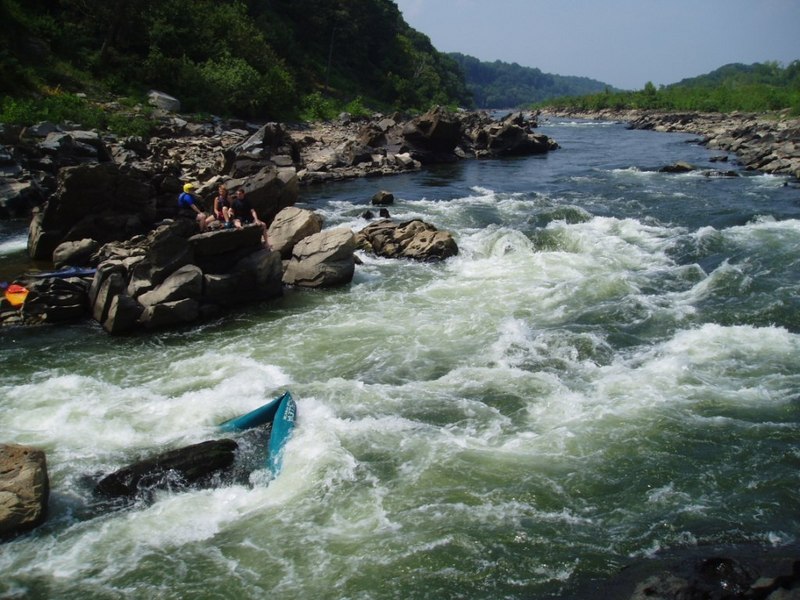
Little Falls on the Potomac River


Some keep the Sabbath going to church;
I keep it staying at home,
With a bobolink for a chorister,
And an orchard for a dome.

Some keep the Sabbath in surplice;
I just wear my wings,
And instead of tolling the bell for church,
Our little sexton sings.

God preaches, - a noted clergyman, -
And the sermon is never long;
So instead of getting to heaven at last,
I'm going all along!

(Emily Dickinson)

Identity church or community church?

Should church keep focus on preserving identity - to be home for its own flock?
Or should it rather focus on the present-day heterogeneous community – to address spiritual demands of anyone, regardless of religious denomination?

Where majority belongs to the same church there should be no such dilemma and the priest could do both without compromising (though even in such places the flock is actually far from homogenous).

But what about places where communities gather people belonging to religious denominations of all sorts (if any)? There the priest has to make a choice.

Southerner churches in US (the so-called conservative Christians) found the answer in the nondenominational approach. I was wandering what would be the answer from the other side of the Protestant church in US (the liberals, the progressives, as they are known). I found it at the Brookmont church.

Brookmont is a small community on the Maryland border of Potomac, close to Little Falls area – around six miles distance from DC. A trolley used to link Brookmont (and other neighboring communities, like Cabin John, Glen Echo, or Palisades) to downtown Washington. The trolley is no more – a bus service operates now on the McArthur Boulevard (the old Conduit Road) – and besides, everybody has a car.

People in Brookmont adore kayaking and virtually everyone has a kayak or two in the backyard. To reach the border of the river is a matter of five minutes.

I discovered Brookmont and its church on one of my walks through the surroundings of Washington – and since then I passed by many times.

The church has a traditional architecture, like any given church in Maryland or Northern Virginia. In front of the church, a small memorial – a post on it, there was a quote from Gandhi:

We must become the change we want to see.

I remembered another aphorism of Gandhi; I had read it on a post in Washington Square, in New York – in 2001, two days after the September 11:

An eye for an eye would make the whole world blind.
Next time when I passed by the church, there was another post: a quote from John of the Cross, a catholic saint from the sixteenth century:

One dark night...
I went out...
With no other light or guide
That the one that burned in my heart.

The church, and the entire place around, that community of Brookmont, was giving me a feeling of peace and kindness, and I was wandering what denomination was this church. Baptist? Presbyterian? Unitarian? Maybe Episcopal? There was no indication of any sort. I tried to ask someone there. A lady was walking with her dog, I approached her and I put the question. I don’t know, answered she with a smile. It’s our church, that’s all I know.

I passed by the following weekend. The post now was quoting Khalil Gibran:

Love is the only flower that growths and blossoms without the aid of seasons.
Khalil Gibran, who wrote once,

We live only to discover beauty
All else is a form of waiting.

and also,

Think of me when you see the sun
Coming down towards its setting
Spreading its red garment
Upon the mountain.


A man was working on his car. I asked him about the denomination of the church, and he replied smiling, as the lady a week before, I don’t know, it’s our church, that’s all I know. You should ask Peter. Who is Peter? I said. The minister, he lives in the house neighboring the church. Go and knock at his door, he’s very nice.

I didn’t. It was rather late and I had still some distance to cover, to be back in the city.

The following week I started a search on the web. I found two references. There was a site related to outdoor activities in the area of Little Falls; a link took me to the copy of an article published in the Washington Post in 2000 - it was about Brookmont and various activities on the church were mentioned, among other aspects of community life.

I found also another another web site; it was an organization with publishing activities, devoted to the understanding of various concepts of peace. I read there that the organization, Peace Evolutions, was keeping some of its public activities in the sanctuary of Brookmont church.

There was also a blog attached to the web site, authored by Jeff Glassie, the leader of Peace Evolutions. I wrote to him and Jeff answered very quickly. He too was advising me to go to the minister, Peter Ainslie.

For two or three weekends I was away from Washington – the duties of my job sent me to Texas for a while.

When I came back, I went on a Saturday again to Brookmont. This time I found the minister, Peter Ainslie. He was about to go somewhere, so we talked briefly, and it remained that we would go on by eMail, which we did the following week.

Peter is a very pleasant man, with a very nice approach. He explained to me in his email the way his church runs. It used to be a Northern Baptist church, only the community in Brookmont comprises Baptists, Unitarians, Catholics, Jews, as well as people who do not belong to any denomination. And the church became a home for all of them, serving the community with weddings, funerals, renting space to a children’s' dance class, arts group, peace and social justice committee, men's group, vespers twice a month, several yoga classes, and calling on the sick and needy. They also give clothes and serve the inner city homeless shelters every week.

What about the divine office? They gather material from different sources, some Jewish, Buddhist, and Christian. Leadership is encouraged for these services. Everything is in the perimeters of a basically liberal Christian heritage.

Identity or community church? Well, Peter found the answer – the identity of his church is just this one – to serve the whole community.

I passed by there last Saturday. The post in front of the church was now quoting Elisabeth Barret Browning:

Earth's crammed
with heaven,
And every common bush
afire with God,
But only he who sees
takes off his shoes.


(Church in America)


(Looking for the Old Trolley)

Labels: ,