Updates, Live

Friday, December 30, 2016

Yunques ahumados

La última metáfora de Lorca: dos latas de atún…
(fuente de la imagen: el blog de Ariovisto)
no copyright infringement intended


Yunques ahumados
sus muslos se me escapaban como
peces sorprendidos
la mitad llenos de alas
(fuente: El País)

Dirías que es Lorca. ¡Pero no lo es! Extrañamente bastante, el autor de este poema (compuesto bajo la influencia de Lorca, esto es verdadero) es - ni más ni menos - un programa de ordenador. ¡Sí, un robot poeta! Leí en El País de hoy un artículo interesante sobre ello: Doctor en Informática, experto en inteligencia artificial, sus programas y aplicaciones han generado verso, cuentos y hasta la narrativa de un musical.


Y aquí está el poema de Lorca, Romance de la Peña Negra:


Las piquetas de los gallos
cavan buscando la aurora,
cuando por el monte oscuro
baja Soledad Montoya.

Cobre amarillo, su carne,
huele a caballo y a sombra.
Yunques ahumados sus pechos,
gimen canciones redondas.

Soledad, ¿por quién preguntas
sin compaña y a estas horas?

Pregunte por quien pregunte,
dime: ¿a ti qué se te importa?
Vengo a buscar lo que busco,
mi alegría y mi persona.

Soledad de mis pesares,
caballo que se desboca,
al fin encuentra la mar
y se lo tragan las olas.

No me recuerdes el mar,
que la pena negra, brota
en las tierras de aceituna
bajo el rumor de las hojas.

¡Soledad, qué pena tienes!
¡Qué pena tan lastimosa!
Lloras zumo de limón
agrio de espera y de boca.

¡Qué pena tan grande! Corro
mi casa como una loca,
mis dos trenzas por el suelo,
de la cocina a la alcoba.
¡Qué pena! Me estoy poniendo
de azabache carne y ropa.
¡Ay, mis camisas de hilo!
¡Ay, mis muslos de amapola!

Soledad: lava tu cuerpo
con agua de las alondras,
y deja tu corazón
en paz, Soledad Montoya.

Por abajo canta el río:
volante de cielo y hojas.
Con flores de calabaza,
la nueva luz se corona.
¡Oh pena de los gitanos!
Pena limpia y siempre sola.
¡Oh pena de cauce oculto
y madrugada remota!


Dice Ariovisto en su blog, Lorca es un poeta brutal. ¿Lo es? Escucha aqui:


Cántica Cuarteto: Romance de la pena negra
Composición y arreglos: Manuel Esteban.
Intérpretes: Cántica Cuarteto.
Dirección y realización: Javier Gómez Bello
(video por Cántica Cuarteto)


Y veamos ahora cómo suena el poema en rumano (traducido por Gabriela Banu)


Balada durerii crude
Lui José Navarro Pardo
traducere de Gabriela Banu

Junghierul cocoşilor
după auroră sapă
când din umbra munţilor
Soledad Montoya-apare.

Galbenă aramă, carnea-i,
iz de cal şi-ntunecare.
Sânii, încinse nicovale,
gem în cântece rotunde.
Soledad, pe cine cauţi
singură, în zori, anume?
Caut eu pe cine caut
dar ţie ce-ţi pasă, spune?
Merg să-mi caut căutarea,
bucuria-mi şi fiinţa.
Fată-a patimilor mele,
bidiviu pierdut în lume
ce-n sfârşit găseşte marea
şi-l înghite valu-n spume.
Nu îmi aminti de mare
durerea crudă-mi răsare
din ţărâna de măsline
sub foşnet de foi peline.
Soledad, ce chin ascunzi?
Lacrimi de lămâie plângi
de dor şi de gură acre.
Negru chin ce mă apasă!
Din bucătărie-n casă
rătăcesc ca o nebună
despletită, făr’de strună!
Crudă durere! De tăciune
hainele îmi simt şi carnea!
Vai, cămaşa mea de in!
Vai, voi coapselor de crin!
Soledad, îţi spală trupul
cu a ciocârliei rouă
şi lasă, Soledad Montoya-n pace,
chinul greu ce te apasă.
Sună râul jos în vale
şovăind, cu cer şi frunze.
Cu flori de bostan, lumina
zorilor se încunună.
O, durere de ţigan
veşnic singură şi pură
jale cu izvor ascuns
şi cu dimineţi de dor!


(Federico del Sagrado Corazón de Jesús García Lorca)

(Gabriela Banu)

Labels:

Monday, August 15, 2016

El País: Escritor Poliédrico y Universal


(Federico del Sagrado Corazón de Jesús García Lorca)

Labels:

Friday, June 17, 2016

Federico del Sagrado Corazón de Jesús García Lorca

firma de Federico García Lorca
(fuente: wiki commons)
no copyright infringement intended


(Una Vida Entre Libros)

Labels:

Tuesday, April 05, 2016

El Amor de Mis Amores

(fuente: De Todo Un Poco - Blog de Optimista)
no copyright infringement intended

Sevilla para nacer, Granada para morir ... un poema que muchos creen que fue creado por Federico García Lorca. En realidad no habría sido posible: uno de los versos menciona el Puente de San Rafael de Córdoba, y este puente fue inaugurado en 1953 (mucho después de la muerte del poeta). En realidad este poema fue compuesto por Juan Antonio Hurtado. Juntos con la música de Alonso Pavón fue registrado en 1980 sobre un disco de Amigos de Gines.
(encontré esta explicación en un blog dedicado a la vida musical de Sevilla)


Sevilla para nacer.
Granada para morir.
Málaga de mis amores,
¡cómo me acuerdo de tí!

El amor de mis amores,
lo que más quiero en la vida
y ésta es mi tierra señores
y se llama ANDALUCÍA

Cádiz es un pañuelo blanco
y un suspiro en la bahía.
Huelva es fandango y bandera
de Aracena a Punta Umbría.

Córdoba es mora y cristiana,
Puente de San Rafael.
Almería y sus parrales.
Olivares de Jaén.

Quien reniega de su tierra
debería ser codenao.
Mi orgullo es ser andaluz,
por to los cuatro costaos.
(fuente: es answers yahoo)

Aquí está un podcast del poema:


(Federico del Sagrado Corazón de Jesús García Lorca)

Labels:

Wednesday, January 04, 2012

Un Chien Andalou


What could be said about Un Chien Andalou that hasn't for now been said? The woman's eyeball cut with a razor came from Buñuel, the man's hand crawled by ants from Dalí; which of them had the idea of moving the hair from the woman's armpit on the man's chin, that I don't know; the illustration from Vermeer is related to the fascination Dalí had for the Dutch master; as for references to the works of Lorca and Jimenez (Platero y yo, telling la vida y muerte del burro Platero, dedicada a la memoria de Aguedilla, la pobre loca de la calle del Sol que me mandaba moras y claveles), I'd let for you to discover. You can find more in Wikipedia (and in many other places).

The beginning, with Buñuel cutting the woman's eye (well, they used a cow or a calf or something, so don't jump too hastily on conclusions) wanted to be, I think, the moment when the cinema, as it had been known, were declared officially dead and a totally new art was starting its way.


(Filmele Avangardei)

(Cinéma Français)

Labels:

Tuesday, July 24, 2007

Gabriela Banu - despre Santiago si nu numai


Paulo Coelho, Jorge Amado, Frederico Garcia Lorca - trei autori talmaciti de Gabriela Banu in romaneste.


Labels: ,

Thursday, September 07, 2006

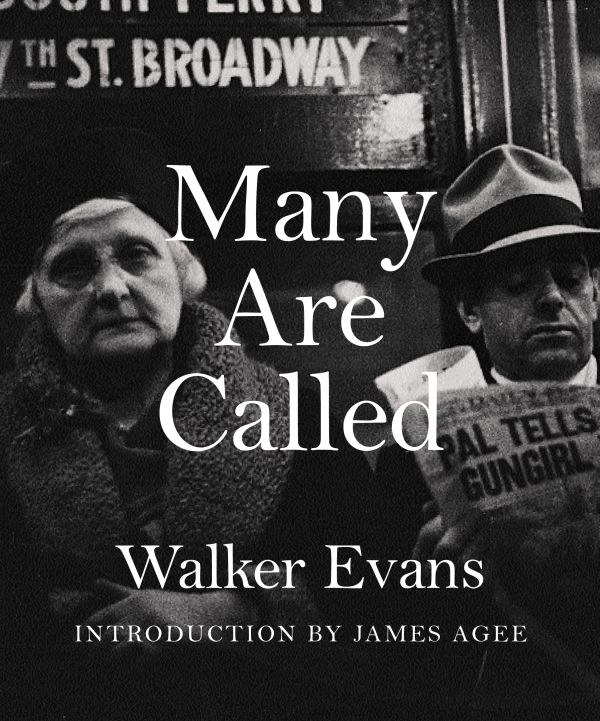
Many Are Called - the NY Subway Photos of Walker Evans

Walker Evans, Many Are Called
(Click here for the Romanian version)

Walker Evans made his New York Subway photos in 1938, with a camera hidden in his coat. In 1966 the photos would be collected in a book, Many Are Called.

Many Are Called - there is a story on display on one of the walls of Ellis Island Museum. It's a story coming from the folklore of Italian immigrants: We have been told that in America streets were paved with gold. We came here to find out that streets were not paved with gold, they were not paved at all, and we were expected to pave them.

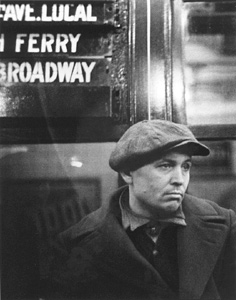
Walker Evans, Lost in Thought Yes, Many Are Called. The American Dream is for all, the winners are some.
The others are the people populating the photos of Walker Evans. The images were shot in 1938, yet I met these same people in the New York subway - the commuters, looking for a job or running from one job to another. The same characters in 2006 as in 1938. This worker, lost in his thoughts, is in the train number 1, going to the Staten Island Ferry (the persons in the first image seem to be in the same train, toward the ferry). In all subway stations the platforms fit 10 cars - only the South Station (for the Staten Island ferry) has a platform accommodating only the first five cars of the train.
So trains number 1 have a notice in each car, informing the passengers that for South Station one has to be in one of the first five cars. The notice is in English, Spanish, Chinese, Korean, and Italian. And starting with the station from Canal Street, the train operator reminds the passengers that for South Station they have to be in one of the first five cars.
I was once in that train, going to the ferry, and I took place in the first car. The operator was repeating the warning in each station. Chambers Street station came and the operator announced us that this was our last chance to change the train for Brooklyn. Then again the announcement with the first five cars.
Rector Street, the last stop before South Station. Again the announcement. The train put itself in motion. Two minutes, and the train stopped. We waited patiently, only after ten minutes people started to loose patience. The operator went out of his cabin. We asked him what the matter was. He didn't answer. He traversed all cars, and put the train in motion backwards, so we arrived again at Rector Street. We went out of the train and asked the station manager what happened. I don't know, was the answer. People were angry, but we need to go to the ferry.
Then you should have been in one of the first five cars, replied the manager.
I arrived very late at home that evening. I started to tell the story, I was interrupted, you should have in one of the first five cars!

Billy Bitzer (the cinematographer of The Birth of a Nation and of Intolerance) made in 1905 a short feature (5 minutes) having as unique character the New York Subway: a view of a subway car, taken from another one, as it makes a trip through the tunnels from Union Square to Grand Central. The New York Subway Network had started to operate just seven months ago.

I came once to New York when the whole transportation system was in strike. It was in 2005, just before Christmas. I spent three days wandering through the streets of Lower and Mid Manhattan - one of these days I went to meet a friend, so I walked the whole distance from Union Square to Grand Central.

This New York Subway is part of the collection of short movies about New York, produced between 1899 and 1940. Billy Bitzer is present in the collection also with another movie, Panorama from the Tower of Brooklyn Bridge, made in 1903. Only 30 seconds of film could be recuperated for the collection: a view of Lower Manhattan from atop the Brooklyn Bridge. The image was seriously damaged, which makes it a masterpiece! One of the most hallucinatory images of Lower Manhattan I have ever seen.

Am petrecut toata noaptea pe schelele mahalalelor
lasandu-mi sangele pe stucatura proiectelor,
ajutandu-i pe marinari sa stranga velele sfasiate.
si stau cu mainile goale in murmurul gurii fluviului.
(Federico Garcia Lorca, Christmas at Hudson,
Romanian version by Gabriela Banu)

Tide swift and ample, well-loved by me, toward sundown
(Walt Whitman, Mannahatta)


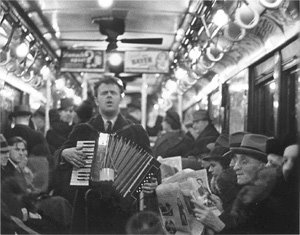
Walker Evans, The Accordian Player
Many Are Called - this accordion player, the singers on subway trains and stations, or on the Staten Island Ferry, the ambulant preachers with Bible in hand, some people are looking at them, others are reading the newspapers, some mock them - I remember the ambulant preacher coming everyday on the Staten Island Ferry and reminding us every time that End Is Near - he had once an accident but kept coming in crutches - I admired his will.


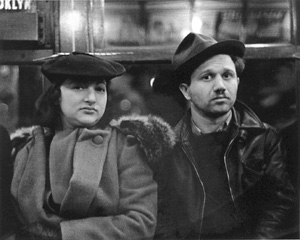
Walker Evans, Suspicious?


The suspicious couple seems to go in the same train number 1, towards the ferry. And the ladies? I met them so many times on subway and on the ferry: the ladies of Staten Island, I should tell once their story.
The universe of New York subway: commuters between two jobs, people looking for a job, music players and preachers, indifferent regards, suspicious regards, gossip... Many Are Called.

Walker Evans, Gossip


(New York, New York)

Labels:

Tuesday, September 05, 2006

New York, New York

Childe Hassam, Manhattan's Misty Sunset, 1911


Proud and Passionate City
(Walt Whitman)

New York de namol,
New York de sarma si moarte:
Ce ingeri ascunsi porti in obraz?
(Federico Garcia Lorca, Romanian translation by Gabriela Banu)

The free city! no slaves! no owners of slaves!
The beautiful city, the city of hurried and sparkling waters!

The city of spires and masts!
The city nested in bays! my city!
(Walt Whitman, Mannahatta)

Iar tu, frumosule Walt Whitman, dormi pe malul Hudson-ului
cu barba catre pol si bratele deschise
(Garcia Lorca, Oda la Walt Whitman)


(Federico del Sagrado Corazón de Jesús García Lorca)

(Walt Whitman)

(Gabriela Banu)

Labels: , ,

Thursday, May 25, 2006

Ingeniosul bine temperat

MHS, Ingeniosul bine temperat Acasa ma astepta un colet, l-am desfacut, era Dictionarul Onomastic al lui Mircea Horia Simionescu. Pe pagina de garda mi-a facut onoarea de a imi scrie o dedicatie. Aici, departe de tara, duc dorul cartilor in romaneste. Am cateva doar, un prieten bun mi-a trimis Craii lui Mateiu si Supravietuirile lui Cosasu. Si o carte pe care aici nu aveam cum sa o gasesc oricat as fi cautat-o, Arta icoanei, O teologie a frumusetii, a lui Evdokimov.

Cand am plecat din Bucuresti, acum cativa ani, am luat cu mine o carte pe care tocmai o cumparasem cu cateva zile inainte, Intoarcerea de Petre Popescu, fusese scriitorul generatiei mele, ma inflacarasem odata cu el in anii de deschidere din deceniul al saptelea, si ani de zile ma gandisem dupa aceea la destinul lui, si la al atator altora, care plecasera. Acum aveam raspunsul, Intoarcerea, pe care o citeam in aeroprot, asteptand sa iau avionul care avea sa ma duca departe, pe drumul pe care el plecase de mult.

Impatimit dupa Milorad Pavici, am cumparat Dictionarul khazar, bine inteles ca aici l-am gasit in engleza. Vai, cata deosebire fata de limba romana, mult mai potrivita sa exprime subtilitatile sarbesti ale lui Pavici!

Verisoara mea, Gabriela Banu, mi-a trimis traduceri facute de ea din Garcia Lorca si Coelho.

In rotunda
rascruce,
sase fecioare danseaza.
Trei de carne,
trei de-argint.
Visele de ieri le cauta,
dar le tine-imbratisate
Polifemul cel de aur.
Chitara!

Sa ma intorc insa la Dictionarul Onomastic, primit azi. E o sarbatoare, la orice pagina l-ai deschide. Si, ca si Dictionarul khazar al lui Pavici, e o carte de nisip. Se deschide mereu la alta pagina. Si te fura imediat, te afunzi, si drum de intoarcere nu mai exista.

Labels: